The recorded history of Arabella by Richard Strauss forces a choice most opera discographies do not. Of the approximately thirty complete recordings that exist, only two were made in the studio: the 1957 Decca set led by Georg Solti and the 1986 Decca set under Jeffrey Tate. Other versions come from a broadcast, house tape, or even a festival soundcheck. That ratio shapes how we hear Arabella on record. Studio recordings offer an idealized version, voices balanced, tempi considered, mistakes removed. Live recordings offer something closer to theater. Singers perform for audiences rather than at microphones. Conductors cannot stop and recalibrate. What you lose in polish you gain in risk, and Arabella, more than most operas in the Strauss canon, rewards risk.
The vocal demands explain why studio discography is so scant. The title role asks for a lyric soprano able to combine the sustained legato of the Marschallin with the silvery clarity of a young woman still capable of surprise. Add glamour without narcissism, vulnerability without weakness, and the casting difficulty becomes obvious. Zdenka needs youthful urgency without shrillness. Mandryka, the wealthy Croatian landowner who arrives to upend everyone’s plans, needs a baritone capable of projecting passion and roughness while navigating melodic lines of real delicacy. And, of course, a conductor able to hold the whole thing together across long arcs of music where the drama moves slowly and the reward for patience is everything.
No singer solved the problem of Arabella more completely in the postwar era than Swiss soprano Lisa della Casa. After Strauss heard her as Zdenka in an earlier production, he reportedly predicted she would one day become his ideal Arabella. Her silvery tone, natural phrasing, and complete ease in the role set the standard against which every subsequent interpreter has been measured. She sang Arabella more often than any other major soprano of her generation. The discography of the opera is, in substantial part, a record of how different conductors and orchestras supported her vision, and what happened after she retired.
What follows is a guide to the recordings worth checking out, organized by what they offer rather than by date. I suggest starting with the 1957 Solti. Then argue about everything else.
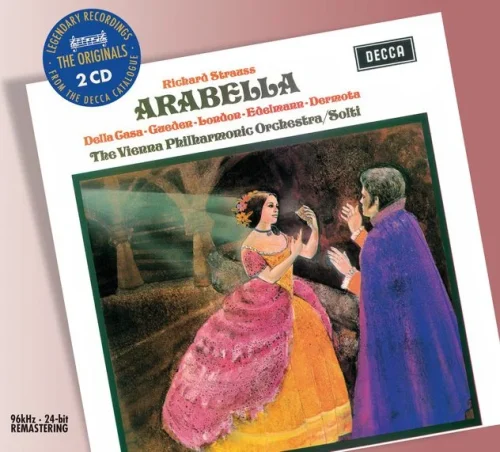
Georg Solti / Wiener Philharmoniker (Decca)
There is a useful irony at the center of this, the standard Arabella recording. Solti was not the originally planned conductor. When Karl Böhm withdrew, Solti was brought in to save the project, and by his own admission he had to learn the opera quickly. He later said he didn’t particularly like it. None of this is audible in the result. What you hear instead is a conductor who understood, perhaps because he was approaching the opera fresh, that it needed urgency as much as warmth. His tempi push harder than later conductors would allow. The Vienna Philharmonic responds with playing that sounds instinctive rather than dutiful. What makes this 1957 recording the one to own is Lisa della Casa. Her Arabella carries silvery certainty in every phrase, the voice of a woman who understands the transactional nature of her world without letting that knowledge deaden her. Hilde Güden’s Zdenka matches her, the two voices blending in the ensemble passages with the ease Strauss wrote for. George London’s Mandryka remains, for many critics, an exemplary performance: formidable presence, dark tone, a baritone who sounds like he arrived from somewhere genuinely foreign.
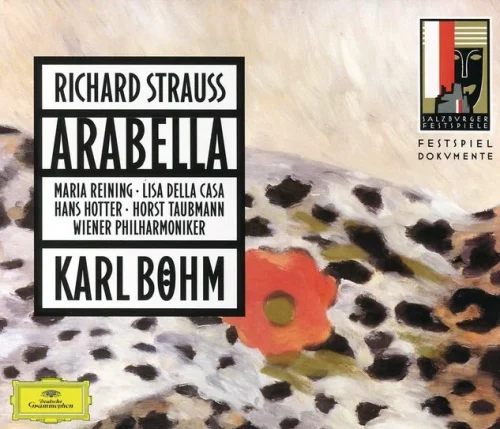
Karl Böhm / Wiener Philharmoniker (Deutsche Grammophon)
Salzburg, two years after the Second World War. When you hear this recording, you hear all of that, not as background atmosphere but as dramatic pressure folded into the music itself. Maria Reining’s 1947 Arabella shows moments of vocal strain. The mono sound is anemic in places. None of it diminishes the performance, though. Böhm had conducted Strauss for decades and understood the long melodic spans of this opera the way few conductors have, sustaining lines without letting the music go slack. Hans Hotter’s Mandryka is unusually powerful, though the role sits high for a voice of his weight. The young della Casa sings Zdenka here, twenty-seven years old, with the voice Strauss heard and identified as his future Arabella. Studio engineering cannot manufacture what this recording has. The sense that the singers are performing for their lives, before an audience, on a particular evening in a particular city, is present in every bar. The next recording to hear after the Solti.
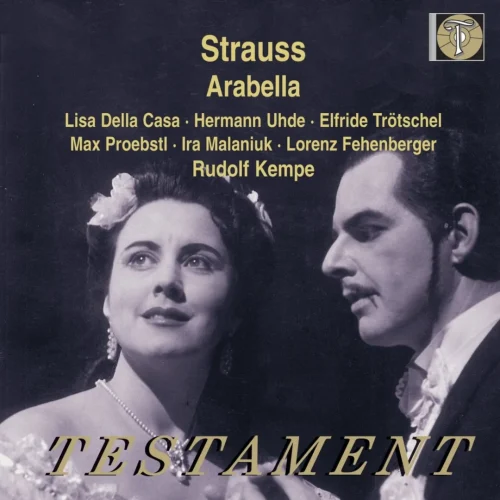
Rudolf Kempe / Bayerisches Staatsorchester (Testament)
In September 1953, the premier Bavarian opera company crossed the Channel and performed German opera in London for the first time since the war. The weight of that fact does not explain this performance, but it inflects it. The occasion gave the evening a gravity that purely musical considerations cannot produce. Kempe conducts with invigorating pace, balancing the score’s long melodic stretches against its more direct emotional moments without smothering either. Della Casa, making her Covent Garden debut, sings with the verve and silver the role demands. Hermann Uhde is Mandryka, Elfride Trötschel is Zdenka. The radio transmission compromises the sound. But the occasion survives intact presenting cultural reconciliation in practice. For anyone interested in what postwar European music meant socially, not just aesthetically, it belongs in the collection.
Joseph Keilberth / Bayerisches Staatsorchester (Deutsche Grammophon)
Della Casa at thirty-eight, still at the height of her powers, with Dietrich Fischer-Dieskau in the role of Mandryka. Keilberth’s tempo is the most leisurely in the discography, allowing the soprano’s legato to unfold in the opera’s dreamier passages without pressure. Fischer-Dieskau’s Mandryka is the slight issue: his baritone precise, dramatic intelligence complete, and his musicianship unimpeachable. The question is whether any of that serves the character. Mandryka is not a man who measures his phrases. He is passionate and impulsive, quick to take offense, quicker to forgive. Fischer-Dieskau’s refinement works against the role’s grain. What the partnership with della Casa produces is still one of the great recorded collaborations in the Strauss discography. The 1963 recording quality favors voices over orchestra, sometimes losing orchestral detail in the process. Essential for della Casa, complicated by its Mandryka.
Wolfgang Sawallisch / Bayerisches Staatsorchester (Orfeo)
Julia Varady’s Arabella has a quality della Casa’s never did: a flickering instability at the heart of a golden tone, a suggestion that this woman’s composure costs her something. It is a different reading of the character, perhaps more psychologically exposed. Helen Donath’s Zdenka complements her well. Fischer-Dieskau, now in his mid-fifties, brings dramatic depth to Mandryka at the cost of some vocal freshness. Sawallisch understood Strauss’s idiom precisely, his tempos calibrated to the opera’s blend of sentiment and irony without over-weighting either. The live 1981 studio recording, made at Bavaria Filmstudios, catches the theatrical urgency of a performance rather than the polished neutrality of a purely clinical session. Sawallisch recorded the opera twice, also in 1977 with Edith Mathis as Zdenka. Both are worth hearing. The 1981 set offers cleaner sound. For listeners who want an Arabella that sounds like it is being thought through rather than simply executed.
Jeffrey Tate / Royal Opera House Orchestra (Decca)
The second studio recording in the opera’s history, and the last. Kiri Te Kanawa had a particular affinity for Strauss heroines, and her Arabella, which she first sang at Houston in 1977, was a signature role. What she brings to the studio is sonic refinement at the highest level. The voice is creamy, the final scene is beautifully shaped, the text delivered with care. Some find her interpretation understated, arguing she perfectly captures Arabella’s outwardly sophisticated, reserved nature, with the passion held at bay. The restraint reads differently depending on what you expect the character to be. If Arabella is a woman concealing her emotions behind social poise, Te Kanawa’s reading is entirely defensible. If she should be capable of surprise and vulnerability, this performance stays too much on the surface. Franz Grundheber is a Mandryka worth admiring: warmer and more pliant than London, less schematic than Fischer-Dieskau. Tate’s conducting is consistently underrated, finding humor in the right places and keeping the opera moving without shortchanging the long lyrical stretches. The 1986 Walthamstow sound is excellent. This is the recording for listeners who want modern digital clarity. Start here if mono transfers give you difficulty. Accept, in return, that something electric has been exchanged for something rich and expansive.
Clemens Krauss / Wiener Philharmoniker (Myto)
Salzburg, 1942. The Third Reich is still three years from collapse. Viorica Ursuleac, who created Arabella at the 1933 Dresden premiere, sings the title role. Clemens Krauss, Strauss’s closest conducting collaborator, is on the podium. The sound is crackly, but the political context is irreducible. What this recording provides is access to the opera as Strauss himself heard it with Ursuleac shaping the role in collaboration with the composer. Her phrasing carries the authority of origin, not interpretation. Krauss understood the opera’s architecture from the inside. Later conductors, even the finest ones, work from the score. Krauss worked from memory and from conversation with the composer himself. Historical significance does not redeem bad sound. Here, it does not need to. The performance would compel attention regardless. Essential for understanding what Arabella was before it became a repertory object.
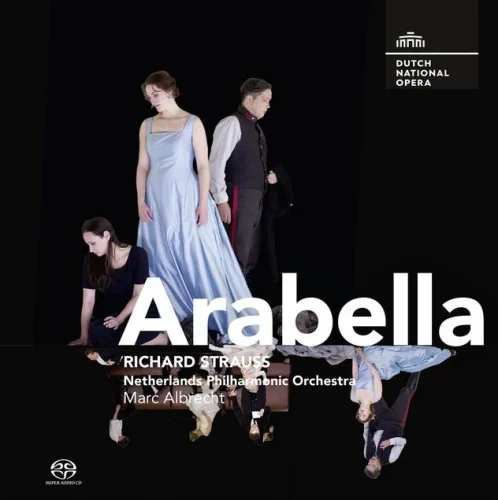
Marc Albrecht / Netherlands Philharmonic (Challenge Classics)
The contemporary 2015 entry in the discography, and an argument that the role does not require a specifically Viennese voice to succeed. Jacquelyn Wagner’s Arabella is cleaner in tone than della Casa or Te Kanawa, less burnished, more aloof. She meets the role’s demands differently than her predecessors, but meets them she does. Agneta Eichenholz is Zdenka. James Rutherford is Mandryka. Albrecht draws playing of real beauty from the Netherlands Philharmonic, the orchestral balances finely judged. Some critics find his attention to the lyric passages slightly indulgent, the music held a beat longer than it needs to be. The intelligence and warmth of the interpretation are clear throughout. This recording demonstrates that Arabella belongs to no single vocal tradition and no single era. For listeners approaching the opera without the weight of the della Casa standard, it offers an excellent entry point.
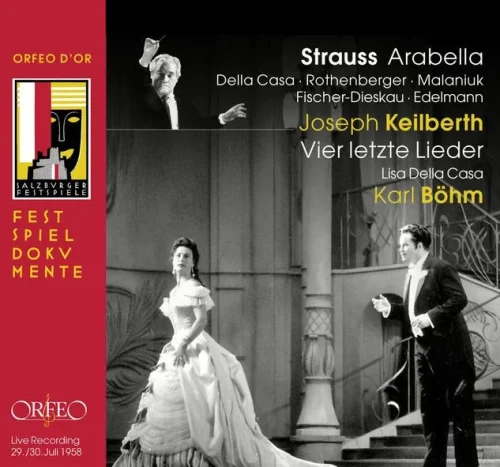
Joseph Keilberth / Wiener Philharmoniker (Orfeo)
A year after her studio recording that defined the role, Della Casa does so again, with Anneliese Rothenberger as a particularly fine Zdenka and Fischer-Dieskau in an earlier, more vocally immediate encounter with Mandryka. Recorded in Salzburg, the Vienna Philharmonic plays with idiomatic warmth. Keilberth shapes the waltz rhythms without losing the long lines. The value of hearing this 1958 recording alongside the 1963 Keilberth Munich set is the Fischer-Dieskau comparison. In 1958 there is more vocal sheen, less of the dramatic architecture he would later impose on the role. Rothenberger’s Zdenka outshines her 1963 counterpart in the ensemble passages, matching della Casa with silver for silver. Mono sound, serviceable. A strong second complement to the Solti studio recording.
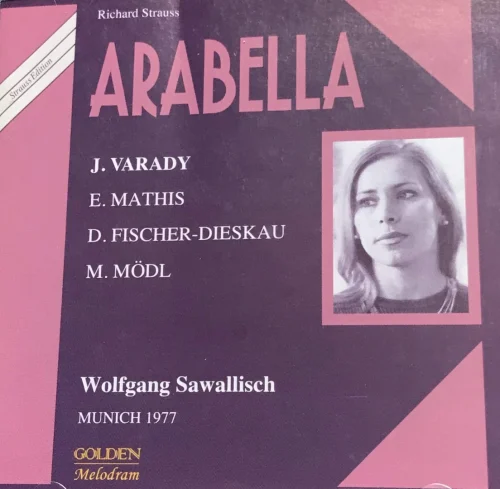
Wolfgang Sawallisch / Bayerisches Staatsorchester (Golden Melodram)
The earlier of the two Sawallisch sets, recorded in 1977 in Munich with Varady, Edith Mathis as Zdenka, and Fischer-Dieskau as Mandryka. Sawallisch’s interpretive approach is consistent across both recordings. What differs is the supporting cast and a slightly more expansive quality in the sound. For listeners who want to trace Fischer-Dieskau’s relationship with Mandryka across the arc of his career, this recording, alongside the 1963 Keilberth and the 1981 Sawallisch, provides the material. His portrayal changes. The voice ages. The dramatic intelligence deepens even as the vocal resources narrow. This one may be best suited to completists. Buy the 1981 Orfeo set first.