On 7 June 1945, three weeks after VE Day, a new English opera opened at Sadler’s Wells. The subject was grim: a Suffolk fisherman whose apprentices keep dying is hounded by a community whose righteousness masks its own cruelty. The audience wept. The critics proclaimed a masterpiece. Benjamin Britten, aged thirty-one, had revived British opera, a genre some considered spent.
In collaboration with Peter Pears and librettist Montagu Slater, Britten reshaped George Crabbe’s violent fisherman into a figure of psychological complexity: a solitary, inward-looking man whose difference renders him vulnerable to collective judgment and eventual destruction. While Peter Grimes has frequently been interpreted, and at times flattened, into “a powerful allegory of homosexual oppression,” the opera’s central character was never intended by Britten and Pears to function as a single-issue symbol. Britten instead framed the work in more expansive and personal terms, describing it as “a subject very close to my own heart—the struggle of the individual against the masses. The more vicious the society, the more vicious the individual.”
But Peter Grimes almost began its life on American soil. Serge Koussevitsky approached Benjamin Britten with a commission, envisioning the opera’s debut at the Tanglewood Festival. Britten, however, pressed for a London premiere, and Koussevitsky ultimately agreed. When Peter Grimes opened at Sadler’s Wells in 1945, the response was immediate and overwhelming. The opera was quickly taken up across Europe, with new productions appearing within weeks. Only afterward did the work cross the Atlantic, arriving at Tanglewood the following summer under the baton of Leonard Bernstein.
At the center of the opera lies not only a punishing vocal and dramatic role, but a deeply human need. Peter Grimes longs for recognition, for a place within the social fabric of the borough, and above all for the restoration of his name. The opera opens with him under scrutiny following the death of his apprentice, who perished after the two were stranded at sea. Though the court clears Grimes of criminal responsibility, the verdict does nothing to soften public opinion. In the eyes of the town, legal innocence counts for little. Suspicion hardens into certainty, and Grimes becomes an object of quiet contempt and open ridicule.
Only with Ellen Orford, the schoolteacher and his closest confidante, is Grimes briefly able to speak without armor. His first unguarded words, “The truth, the pity, and the truth,” reveal the engine driving the rest of the drama. He is not seeking forgiveness so much as acknowledgment. Grimes wants his version of events to be heard and believed. That insistence on truth, on being seen clearly rather than through rumor, runs through the entire opera.
Benjamin Britten / Orchestra of the Royal Opera House, Covent Garden (Decca)
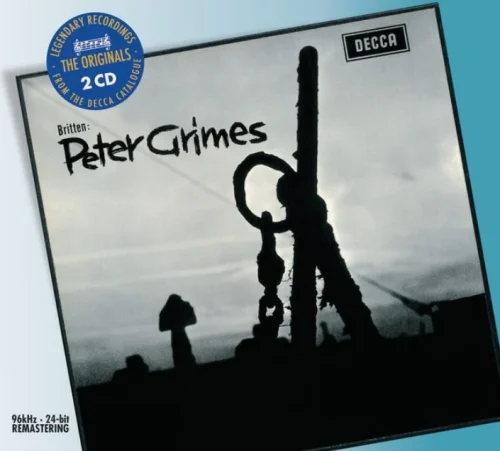
The foundational 1958 version. Peter Pears, who created the role in 1945, sings Grimes as a wounded visionary, his voice at home in the lyrical passages, if less commanding in the outbursts of fury. Love him or loathe him, Pears is the baseline standard. Listen to his “Great bear” if you need convincing. Claire Watson is an empathetic Ellen Orford, and although some find her interpretation less moving than, say, Heather Harper’s, Watson’s interpretation is highly regarded for its technical accuracy and emotional sincerity. James Pease brings gravity to Balstrode. Owen Brannigan, another 1945 veteran, reprises his pompous Swallow. Britten’s conducting has sweep and purpose, pacing the drama to build inexorably toward the Mad Scene. Decca’s John Culshaw engineered the sessions to capture theatrical interaction between the singers. The sound remains vivid. Listening again now, Pears perhaps sounds a little older than a fisherman should, his voice showing the wear of thirteen years in the role. Nonetheless, an indispensable starting point, if not the final word.
Colin Davis / Orchestra of the Royal Opera House, Covent Garden (Decca)
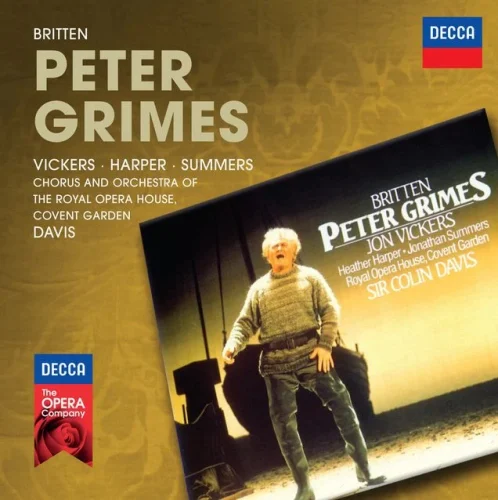
The controversial masterpiece. Jon Vickers reimagines Grimes as a brutal outsider, rough-voiced and explosive, terrifying in his rages and heartbreaking in his collapse. For many, Vickers is the definitive choice. Recorded in 1978, Britten, though, famously disliked it, objecting that Vickers made Grimes evil rather than conflicted. Vickers famously took liberties with the Peter Grimes libretto, altering lines he found unclear or ill suited to his conception of the role, including replacing “Out of the hurly-burly” with “How should I know?” Paired with a darker, more violent interpretation than Peter Pears’ original, these changes often frustrated Britten. Yet while some critics bristled at the departures, others found Vickers’ brooding, burnished Grimes compelling. His approach recast the character not as a repressed, sensitive outsider, but as a harsher, more physically embattled one. Heather Harper delivers a strongly characterized and lyrical Ellen, her “Embroidery in childhood” easily setting the standard. Colin Davis drives the orchestra with rhythmic brutality, emphasizing the score’s violence over its lyricism. The sound is excellent. Accept the interpretation or reject it, but at least hear it once.
Richard Hickox / City of London Sinfonia (Chandos)
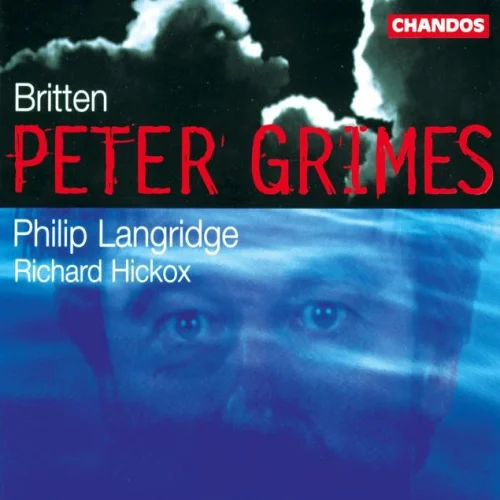
Philip Langridge delivers perhaps the finest all-round Grimes since Pears. His sinewy tenor inhabits both sides of the character: the dreamy idealism of “In dreams I’ve built myself some kindlier home” and the incandescent anger when he feels betrayed. Langridge pivots between these extremes with an ease that makes Grimes’s psychology legible without simplifying it. Alan Opie brings stage-seasoned authority to Balstrode. Janice Watson is almost the ideal Ellen, her embroidery aria matching that of Harper. Hickox’s orchestra surrounds the voices rather than drives them, drawing warmth from passages that other conductors treat as accusation. The 1986 recording places you inside the Borough’s claustrophobic world. Some critics find the London Symphony Chorus too polished for rough edges, but the performance coheres magnificently. The safest recommendation for listeners new to the opera.
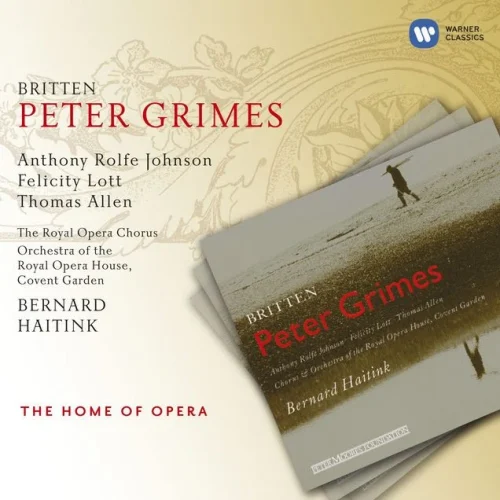
Bernard Haitink / Orchestra of the Royal Opera House, Covent Garden (Warner)
Anthony Rolfe Johnson sings Grimes closer to the Pears tradition: elegant, ethereal, beautiful in the lyric passages, and ultimately less convincing in the brutal moments. The largely underrated Felicity Lott is a deeply musical Ellen, if lacking the fullness of Harper. Thomas Allen brings distinction to Balstrode. A young Simon Keenlyside appears as Ned Keene. Haitink’s conducting paces the Sea Interludes with orchestral weight that makes the Borough’s natural world feel as menacing as its human inhabitants. Made in 1992, the recording quality is excellent, with voices sitting slightly forward of the orchestra. For those who prize vocal beauty over dramatic risk.
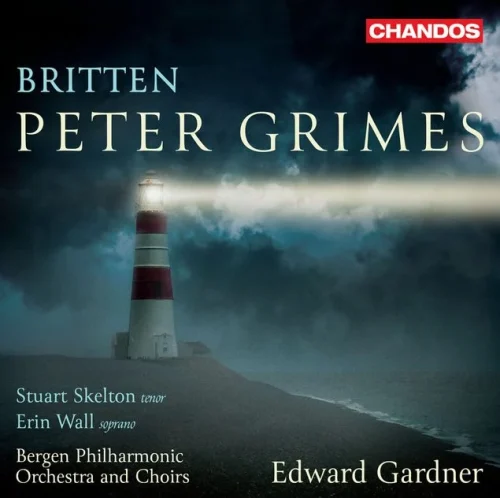
Edward Gardner / Bergen Philharmonic (Chandos)
Stuart Skelton has become the defining Grimes of his generation, and this 2020 Gramophone Recording of the Year captures his interpretation at its peak. Skelton’s big, virile tenor sits closer to Vickers than to Pears, with heroic power and moments of shattering vulnerability. Erin Wall, in her final recording before her death, delivers an Ellen of Straussian warmth and scale. Roderick Williams is a superb Balstrode. Gardner conducts with dramatic urgency, and the SACD sound captures Bergen’s playing with striking transparency. Three choruses combine for overwhelming effect. The recording to own if you own only one.
Bonus
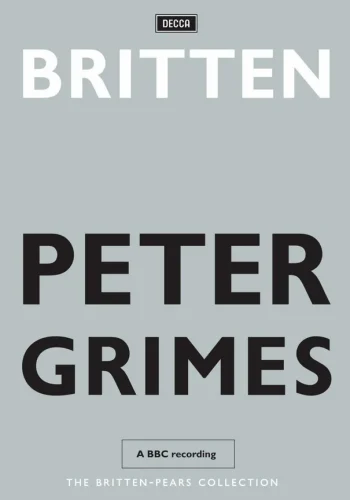
From 1969, a BBC television production captures Peter Pears revisiting the role he created, conducted by Britten himself, with Heather Harper as Ellen. Pears was then in his late fifties, and his voice shows its age, but his understanding of the character runs bone-deep. Harper is magnificent. Britten’s conducting has visceral sweep. The abstract visuals illustrating the Sea Interludes date the production, but the performances transcend their era. Available on DVD.