Metropolitan Opera, New York, 10 October 2026
Wolfgang Amadeus Mozart: Così fan tutte
The last opera to emerge from the fruitful collaboration between Wolfgang Amadeus Mozart and librettist Lorenzo Da Ponte has long been subject to scrutiny because of its controversial and seemingly misogynistic portrayal of women. The title itself, Così fan tutte (roughly translated as “All women are like that”), certainly does little to dispel such accusations. Without attempting to justify the opera’s subject matter, however, I’d like to quote what baritone Andrey Zhilikhovsky, who portrays Guglielmo in this run, told the host during the intermission of the Met’s Live in HD broadcast a few days before the performance I attended: “Relax, guys, it’s just an opera”. Così needs to be seen as a product of its time. Distasteful at times for modern audiences, certainly, but undoubtedly containing some of the finest music mankind has ever heard.
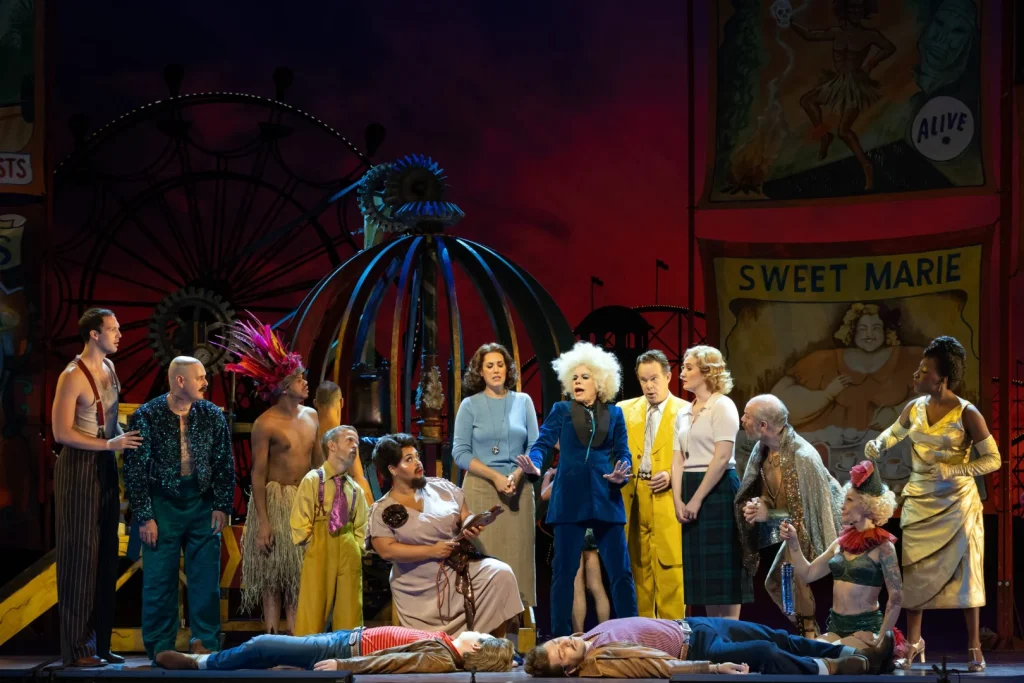
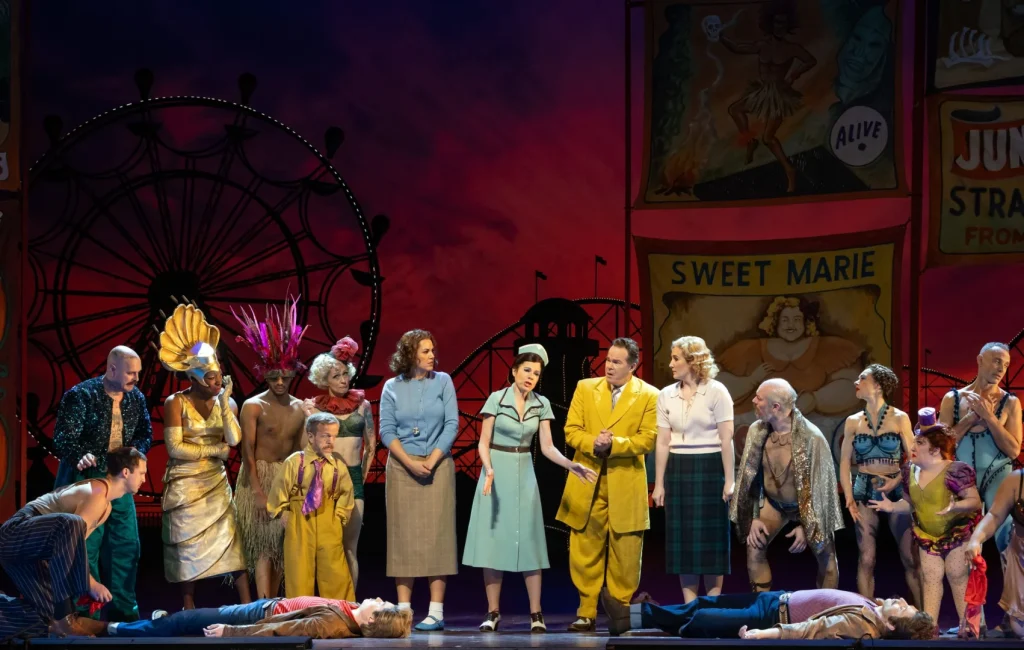
Phelim McDermott’s production, which premiered at the Metropolitan Opera in 2018, boldly transplants the action from 18th-century Naples to 1950s Coney Island and, unlike so many productions that fail miserably in their attempts to modernise operas, succeeds. Così is, after all, an opera about the deepest of human emotions, love, and the complexities that arise from it, including infidelity, distrust and forgiveness. Its themes do not need an 18th-century Neapolitan setting to be understood, unlike those of operas that are inextricably tied to their historical contexts, such as Andrea Chénier or Tosca. Così is also a rollercoaster of comedy, feelings and music, making the amusement park a fitting setting for all the chaos to unfold.
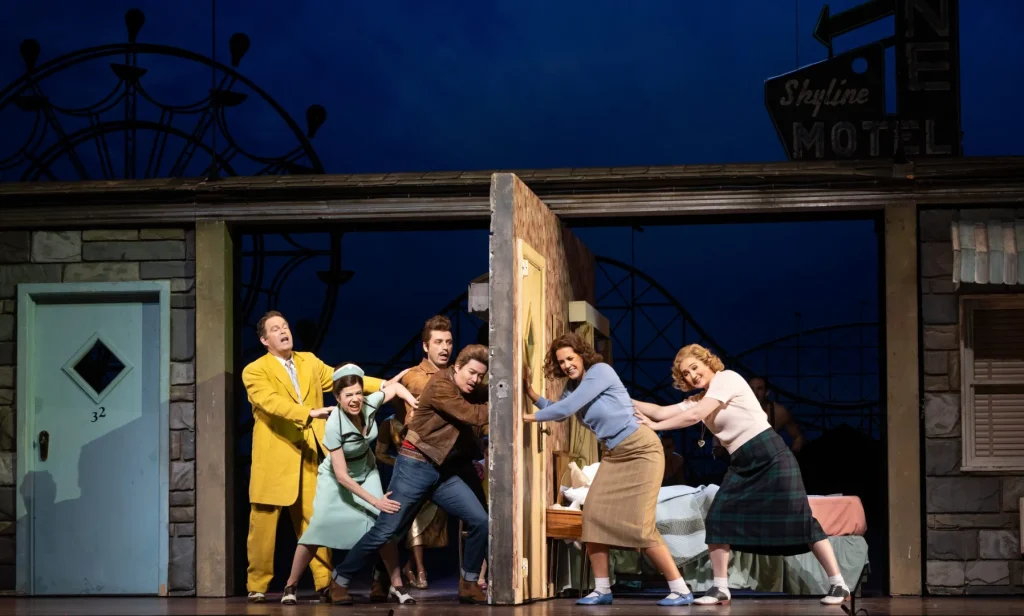
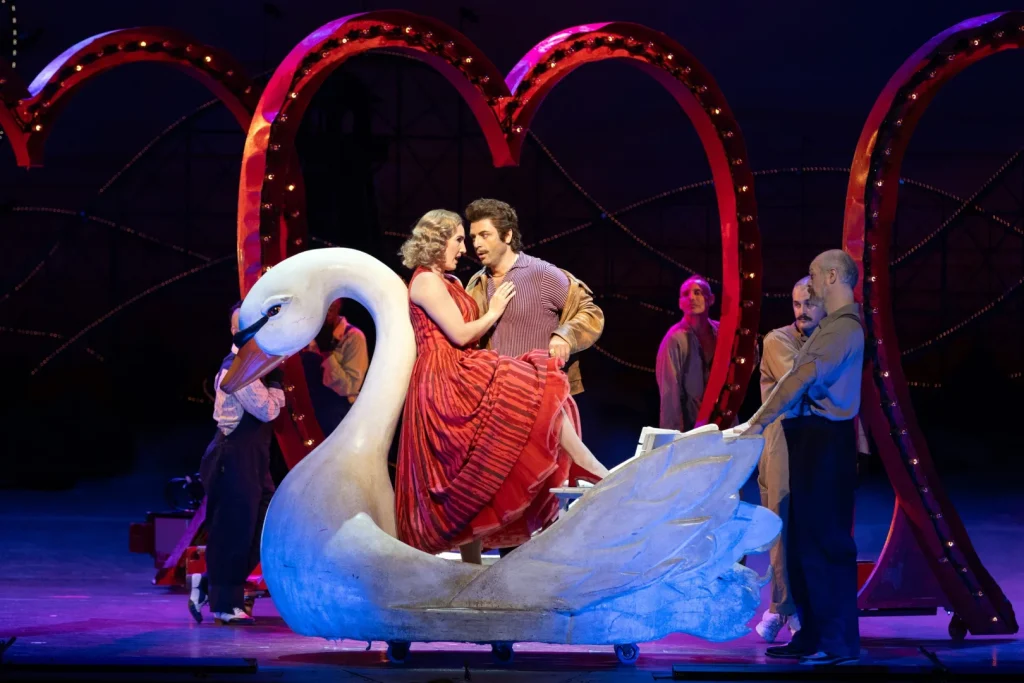
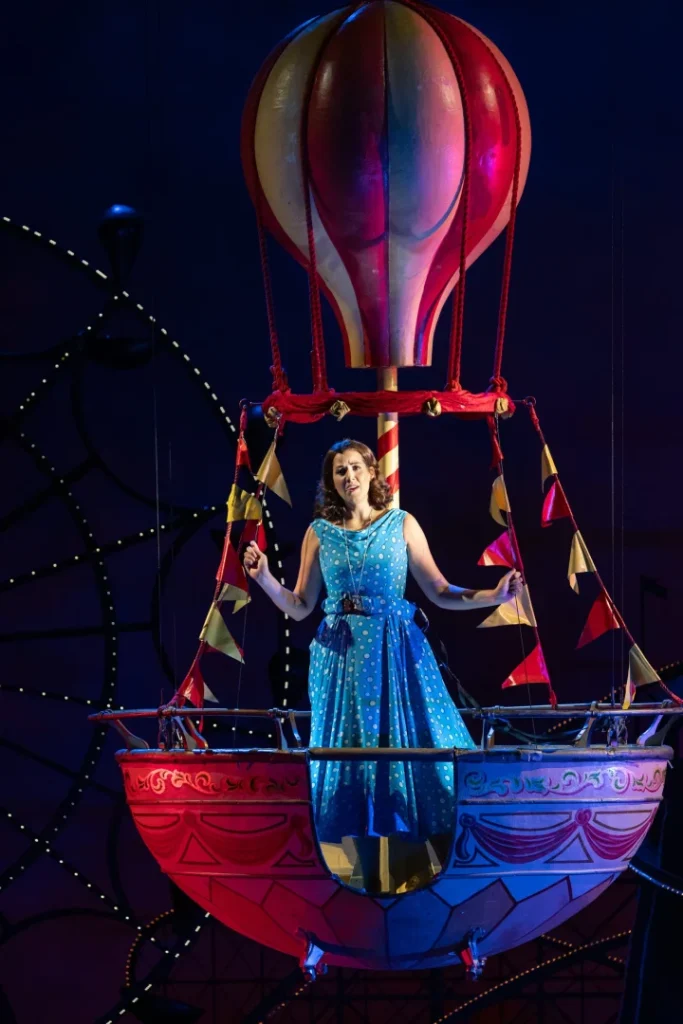
The amusement park provides a wealth of opportunities for imaginative staging, particularly during the opera’s musical numbers. For instance, Dorabella and Guglielmo ride a swan through a Tunnel of Love during ‘Il core vi dono’, while Fiordiligi delivers ‘Per pietà, ben mio, perdona’ aboard a hot-air-balloon-themed carnival ride that carries her across the stage. Equally ingenious is the set representing the sisters’ home, reimagined as a motel comprising three individual rooms, each of which can be rotated to reveal either its interior or exterior. This effectively transforms three rooms into six distinct playing spaces, providing a wonderfully versatile setting for the opera’s unfolding romantic entanglements.
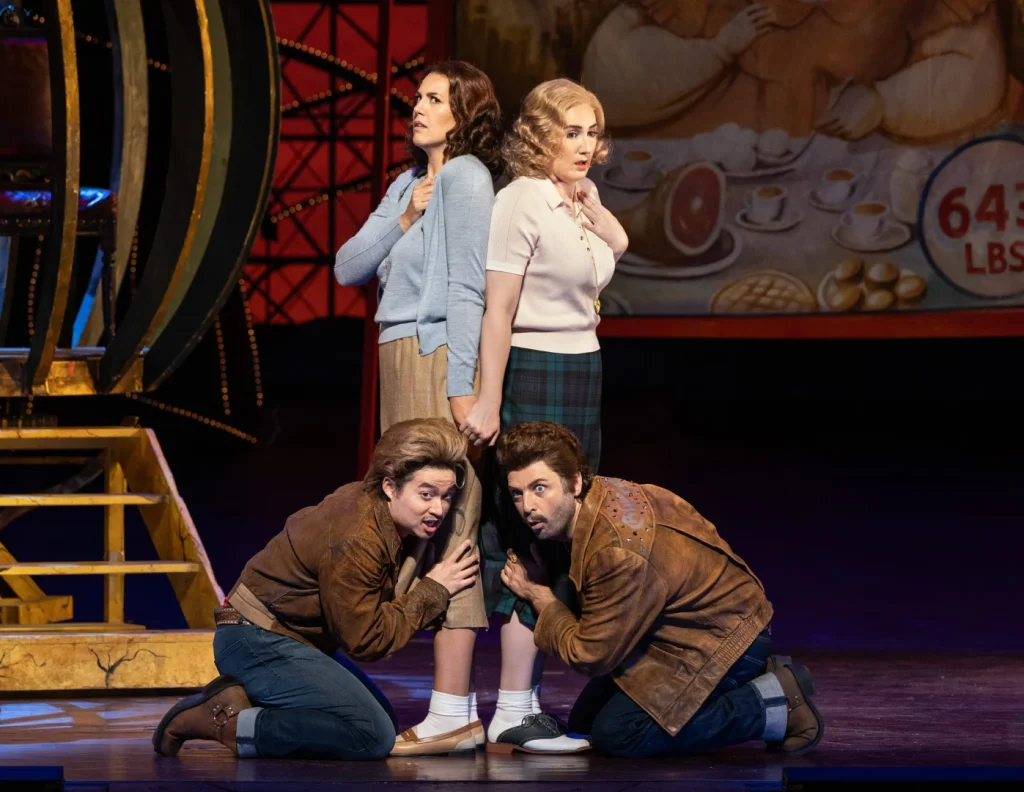
One of my issues with modern productions of Così fan tutte is that Ferrando and Guglielmo’s disguises are often not sufficiently different from their usual attire, making the already rather implausible plot point of their attempts to seduce each other’s fiancée even harder to swallow. Mozart and Da Ponte’s original premise relies on the considerable differences between Albanian and Neapolitan clothing in the 18th century, a distinction that does not necessarily translate to modern settings and one that some productions fail to address convincingly. Here, however, Ferrando and Guglielmo sport towering rockabilly pompadours, moustaches, brown leather jackets, extravagantly patterned T-shirts and even socks stuffed down their jeans to exaggerate their crotches, resulting in numerous comedic moments and providing a striking contrast to Dorabella and Fiordiligi’s modest clothing. Despina, meanwhile, is appropriately dressed as the motel’s housekeeper, while Don Alfonso wears oversized suits reminiscent of a carnival showman, a fitting choice for the man orchestrating the entire deception.
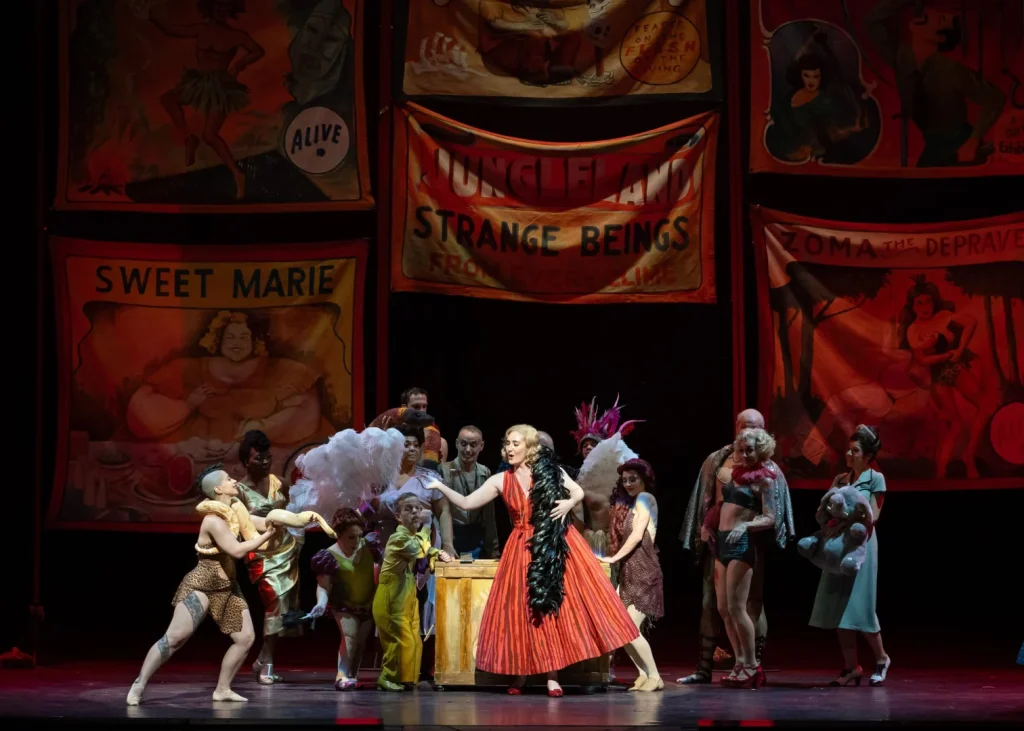
The production features a large ensemble of carnival performers throughout the opera, who are not merely there to entertain the audience but also serve as characters enlisted by Don Alfonso to help him carry out his scheme and make Dorabella and Fiordiligi fall for their respective suitors. The performers include sword swallowers, a fire breather, a contortionist, a snake charmer accompanied by a live python and many others. I found their acts entertaining and particularly appreciated their involvement in the story, as I never felt that they distracted from the singers or the dramatic action. I do, however, have one pet peeve, at the risk of sounding like a grump. During the overture, the carnival performers, alongside Don Alfonso and Despina, engage in an admittedly funny routine in which they move signs around to display various phrases describing the opera. While I appreciate that the audience enjoyed the sequence, I am generally not fond of theatrical action during operatic overtures. In this case, I would have much preferred to listen to the excellent Met Orchestra perform the overture to Così (my personal favourite overture, by the way) without the constant laughter and applause from the audience.
And speaking of the Met Orchestra, Israeli-American conductor Nimrod David Pfeffer led the ensemble superbly throughout the evening. His tempi were consistently well judged, without ever rushing or dragging, imbuing the comedic moments with energy while bringing expressive nuance to the more dramatic passages. He never overpowered the singers and maintained an excellent rapport with them.
As the two couples, four young Mozartians lit up the Met stage from start to finish.
Italian soprano Federica Lombardi and American mezzo-soprano Samantha Hankey excelled as the two sisters, Fiordiligi and Dorabella, respectively. Lombardi possesses a beautiful, crystal-clear voice that soars effortlessly over the orchestra, along with elegant phrasing and more than sufficient agility to navigate Mozart’s most demanding passages. Both ‘Come scoglio’ and ‘Per pietà, ben mio, perdona’ were among the highlights of the evening, the latter all the more impressive considering that Lombardi delivered it while being carried across the stage aboard the aforementioned hot-air-balloon ride. Her acting was just as compelling, capturing Fiordiligi’s more reserved and virtuous demeanour. Even though her voice might eventually lead her towards more dramatic repertoire, Lombardi is, in my opinion, the leading Mozart soprano of our time.
As Dorabella, the more impulsive and susceptible of the two sisters, Samantha Hankey was fantastic. From the outset, she portrayed a woman far more intrigued by the two mysterious strangers than her cautious sister, eventually encouraging Fiordiligi to give in to her own suitor. Her two arias were sung splendidly, while her impressive dramatic range brought Dorabella’s transformation vividly to life, from the anguish and desperation of ‘Smanie implacabili’ to the playful flirtatiousness of ‘È amore un ladroncello’, the latter performed with the assistance of the snake charmer and her live python. Whenever they shared the stage, Lombardi and Hankey displayed remarkable chemistry, their complementary voices intertwining beautifully.
Portraying the two officers disguised as Albanian suitors, American tenor Duke Kim and Moldovan baritone Andrey Zhilikhovsky delivered outstanding performances as Ferrando and Guglielmo, respectively. Zhilikhovsky’s interpretation was extraordinarily funny, with his physical comedy constantly eliciting laughter from the audience. His Guglielmo seemed to relish every moment of the prank played on the sisters, at least until his own fiancée fell for the other man, an approach that made his participation in the deception all the more believable. His big, resonant baritone was equally impressive, whether adopting the mocking tone of ‘Non siate ritrosi’ or delivering the biting denunciation of women in ‘Donne mie, la fate a tanti’, making his performance top-notch in every respect.
Duke Kim’s Ferrando was more restrained than Guglielmo, though still very funny in his own way. His elegant voice boasts precise phrasing and a certain weight that many contemporary Mozart tenors lack and that I have sorely missed at times. His ‘Un’aura amorosa’ was sung beautifully and was an absolute showstopper. The remarkable breath control, impeccable musicality, secure high notes and clean attacks recalled some of the great tenors of the past. His ‘Tradito, schernito’ was no less impressive, showcasing the dramatic capabilities of his voice and providing a striking contrast to the tenderness of his earlier aria. As with Lombardi and Hankey, Kim and Zhilikhovsky worked wonderfully together onstage, not only with each other but also in their interactions with the rest of the cast.
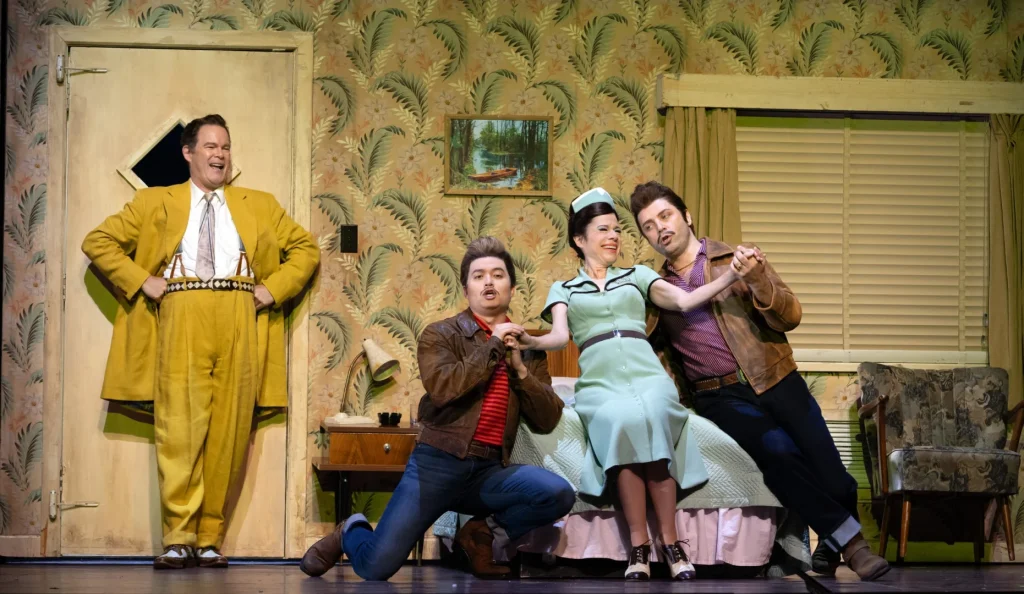
Complementing the two young couples, two more experienced singers, Puerto Rican soprano Ana María Martínez as Despina and Canadian bass-baritone Gerald Finley as Don Alfonso, also proved to be formidable performers. Martínez was magnetic every time she appeared onstage, commanding attention with her charm and wit and proving herself more than worthy of being Alfonso’s co-conspirator. Her warm, well-rounded lyric soprano was heard to magnificent effect in her two arias, while her appearances as the doctor and the notary (reimagined in this production as a Texan cowboy) were uproariously funny, with Martínez adopting different vocal mannerisms and even a Texan accent for the latter disguise.
Don Alfonso can be a somewhat thankless role. He doesn’t get the big arias, yet he is the one pulling the strings to make the entire plot work, spending an enormous amount of time onstage during the recitatives. Simply put, a Così without a good Don Alfonso doesn’t work. Fortunately, that was far from the case here, as Gerald Finley brought his considerable experience and the rich, velvety bass-baritone that has characterised his career to a superb interpretation. He was always scheming or setting something in motion, seemingly in control of everything around him. And, at the end of this production, something rather unusual happens: Don Alfonso gets the girl, Despina, following numerous hints throughout the evening that the two share a romantic history.
I would also like to give a special mention to Jonathan C. Kelly, whose work at the fortepiano, alongside the singers, made the recitatives an essential part of the evening’s charm.
Ultimately, this was a highly successful revival of McDermott’s production at the Metropolitan Opera, featuring excellent singers but, more importantly, the sense of ensemble that is so essential for Così fan tutte to work as it should, one that extended beyond the principal cast to include the conductor, the orchestra and the carnival performers.