Metropolitan Opera, New York, 28 October 2025
Georges Bizet: Carmen
It’s a shame that Georges Bizet didn’t live long enough to witness the success of his final opera, Carmen. Not only is it the most famous and beloved French opera, but arguably one of the most famous in the entire repertoire. This work gave opera its ultimate femme fatale in the character of Carmen — a role every mezzo-soprano dreams of singing though few truly master. The Met has presented many triumphant productions of Carmen in the past: Richard Eyre’s 2009 staging, for instance, opened to resounding success with Elīna Garanča and Roberto Alagna, while earlier productions by Peter Hall and Franco Zeffirelli also became landmarks in the company’s history.
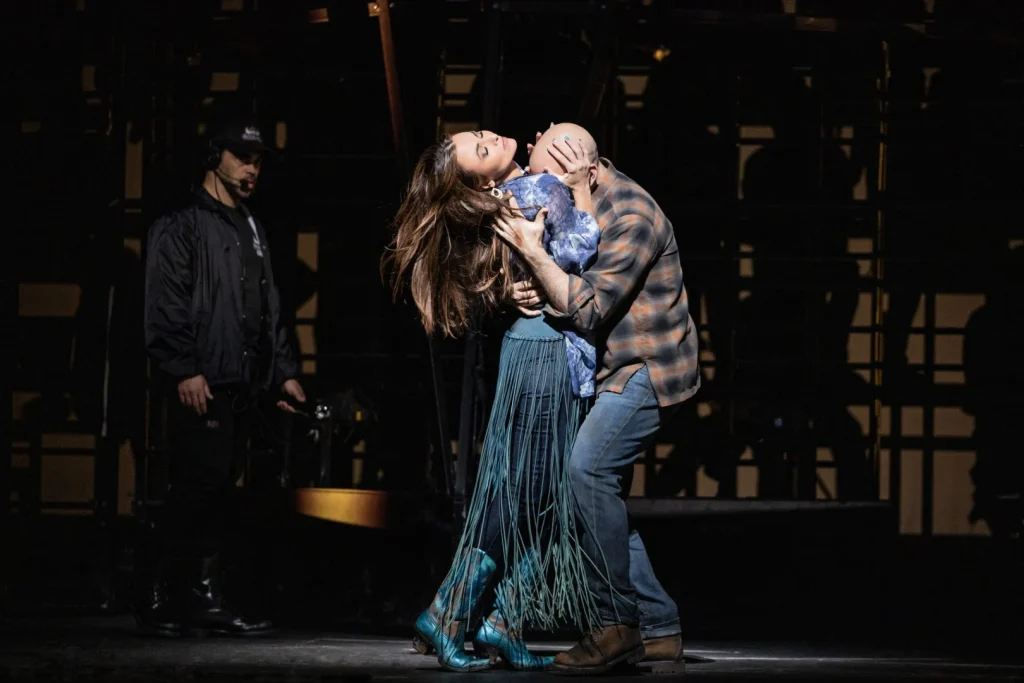
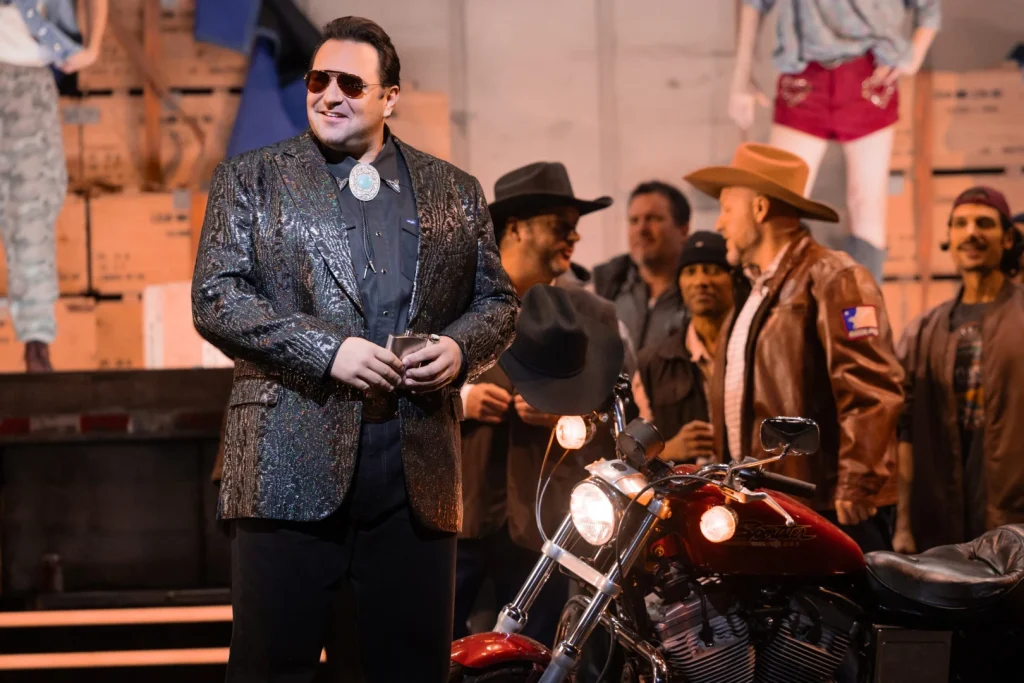
This staging by British director Carrie Cracknell, which premiered last season, was met with mixed reviews and left many critics unconvinced. I prefer not to classify opera productions as “traditional” or “modern,” but simply as “effective” or “ineffective”, and unfortunately this one falls into the latter category. The setting moves from 19th-century Seville to modern-day America, replacing the cigarette factory with an arms plant and the bullfighting arena with a rodeo. Generally speaking, updating or relocating an opera can work to a certain extent. A good example is Michael Mayer’s Rigoletto, relocated to 1960s Las Vegas. There, especially in the first act, the concept comes together beautifully: the sets are striking, the costumes stylish and the atmosphere vividly conveys the opera’s underlying message even in its new setting. This Carmen, however, is quite the opposite.
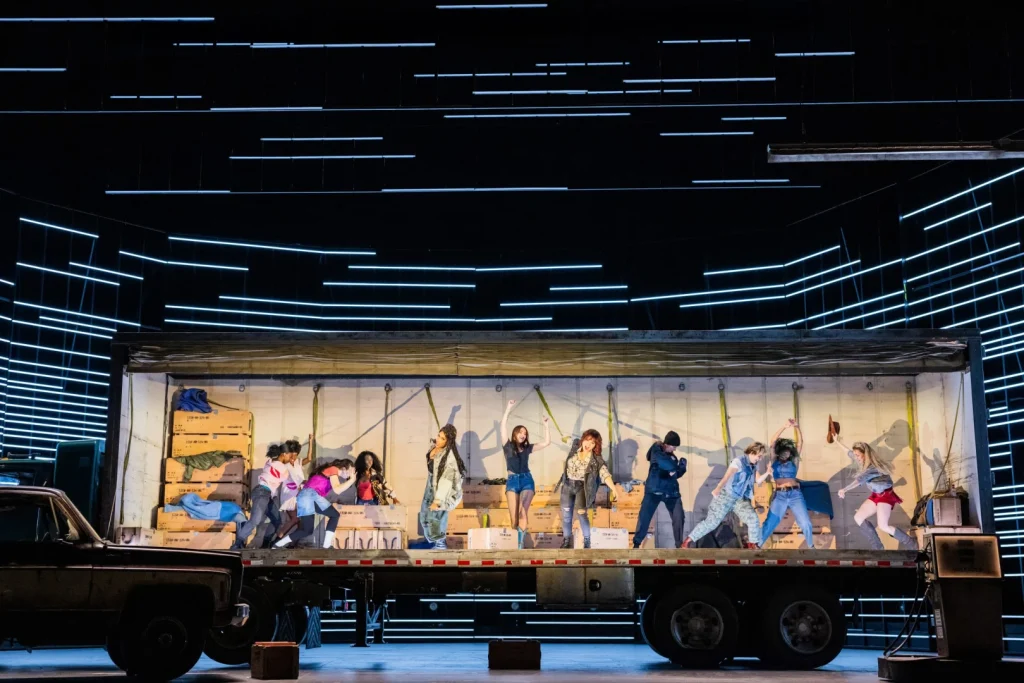
Act I unfolds in the arms factory, with workers trapped behind wire fencing observed by soldiers. Act II takes place in a moving truck whose LED lights flicker to simulate motion — lights reportedly dizzying from certain seats. Act III is set amid a road accident involving the same truck, now distractingly rotating in the background, and Act IV transpires within a tangled structure of metal bars meant to evoke a rodeo, where José murders Carmen by striking her with a baseball bat instead of a knife. Each act looks progressively uglier. The staging remains bare, lifeless and devoid of atmosphere. Even if the ending of Carmen is undeniably grim, there is no sense of vitality or contrast throughout. The altered subtitles, adapted to fit the new context, clash so obviously with the French text that anyone who understands the language or knows the libretto will immediately notice. The result is not only distracting but almost patronizing, as if assuming the audience wouldn’t notice the liberties taken with Meilhac and Halévy’s libretto.
On the musical side, things fared far better. At the podium, French conductor Fabien Gabel made an exciting Met debut, leading the orchestra with precision, dynamic contrast and spirited tempi that showed a deep understanding of the score. The Met still uses Ernest Guiraud’s sung recitatives instead of Bizet’s original spoken dialogue, which slows the pacing and distances the work from the composer’s intent. The chorus, under Tilman Michael’s new direction following Donald Palumbo’s retirement, sounded magnificent. The children’s chorus also performed with remarkable energy and clarity.
The singing saves the evening
Casting American mezzo-soprano Isabel Leonard as Carmen initially raised doubts in my mind — not because of her undeniable talent but because I had long associated her voice with Mozart and Rossini roles, even though she had already sung Carmen in previous seasons at other houses. Yet the moment she began ‘L’amour est un oiseau rebelle’, every doubt vanished. Her voice has matured and darkened and her interpretation was intensely gripping. Leonard’s Carmen isn’t your typical vulgar seductress but a complex, self-possessed woman. You could say that her tone may seem too refined for the role but her attention to detail, phrasing and text made her portrayal riveting. Despite the staging’s limitations, she dominated every scene with magnetic poise. Her intelligent, controlled approach recalled Teresa Berganza — another mezzo-soprano who surprised audiences by excelling in this role after a career rooted in Mozart and Rossini.
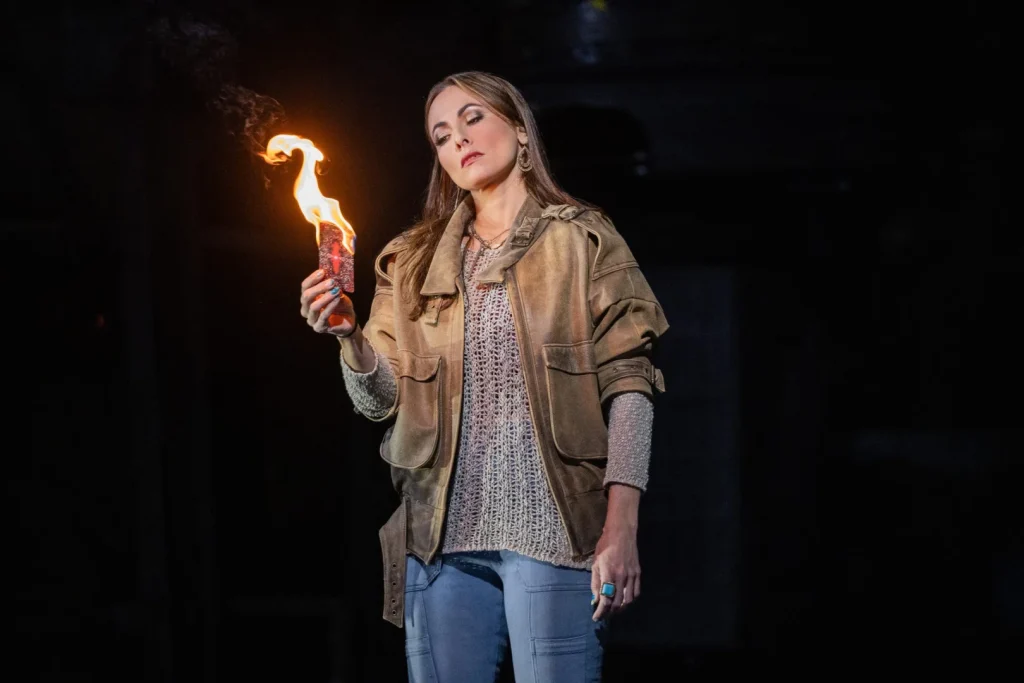
Another singer who has recently begun exploring heavier repertoire is American tenor Michael Fabiano. He positively surprised me last season as Manrico in Verdi’s Il trovatore and has just completed a highly successful run as Calaf in Puccini’s Turandot at the Met, which I had the privilege of attending. Here, he delivered a superb Don José. His large, resonant voice fills the house effortlessly, but what impresses most is his insight into the character. He traced Don José’s descent into obsession and madness with striking conviction. In ‘La fleur que tu m’avais jetée’, instead of showcasing power, he chose the softer come scritto pianissimo B-flat at the end — not only a braver decision, since audiences often expect the note to be belted, but also the right one to honor Bizet’s intentions. His chemistry with Isabel Leonard was palpable, making their scenes both tense and believable.
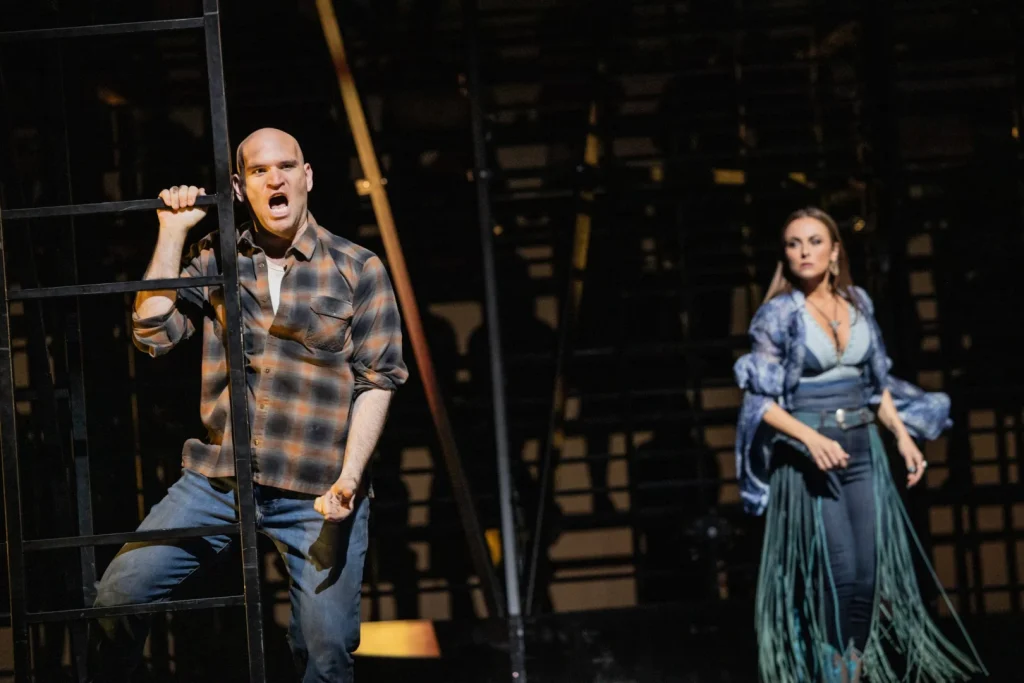
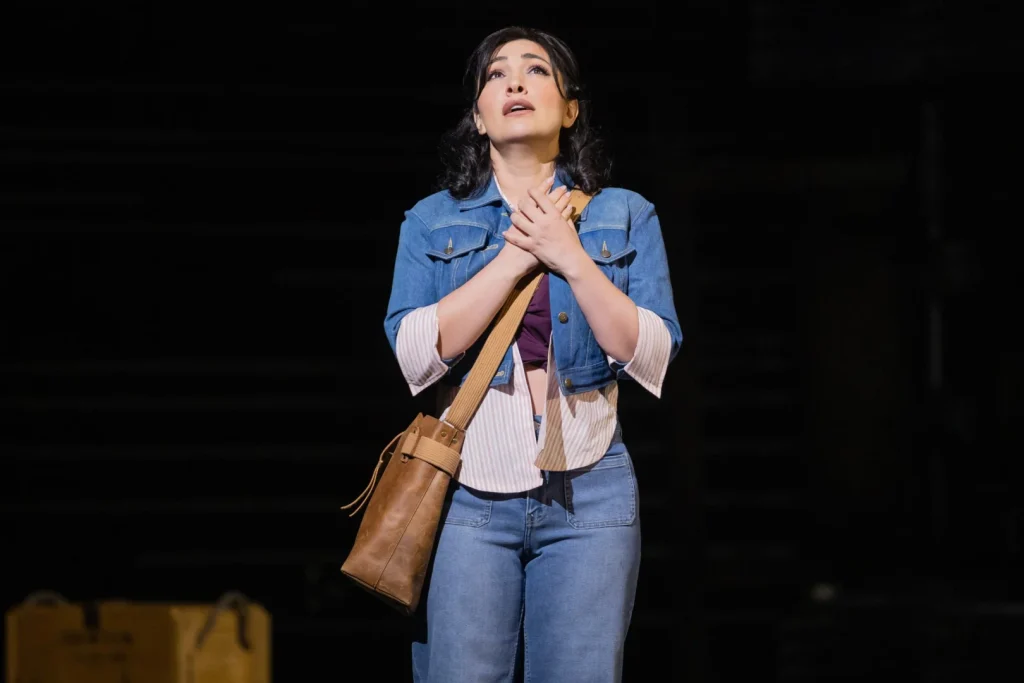
As Micaëla, Armenian soprano Kristina Mkhitaryan offered a luminous performance. Her crystal-clear voice and sincere phrasing brought warmth to her Act I duet and Act III aria, both clear highlights of the night. Czech bass-baritone Adam Plachetka, who recently completed a successful run as Leporello in Mozart’s Don Giovanni at the Met, delivered a strong-voiced and charismatic Escamillo, adding excitement each time he appeared on stage. His ‘Votre toast, je peux vous le rendre’ was superbly sung and was another high point of the night. As Frasquita and Mercédès, Madison Leonard — making her Met debut — and Briana Hunter delivered strong showings, as did Aaron Blake and Michael Adams as Remendado and Dancaïre, with the Act II quintet with Carmen sung superbly.
Ultimately, Carrie Cracknell’s misguided Carmen may falter as theater, but with such a cast and Fabien Gabel in the pit, you’ll have a wonderful evening — provided you don’t mind closing your eyes from time to time.