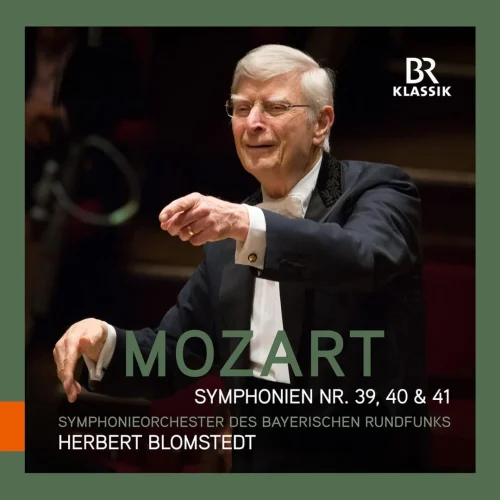
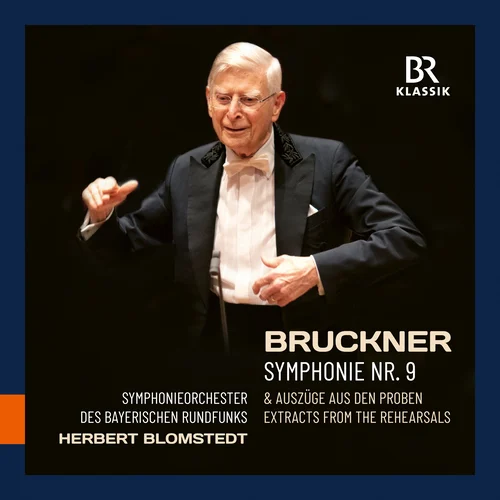
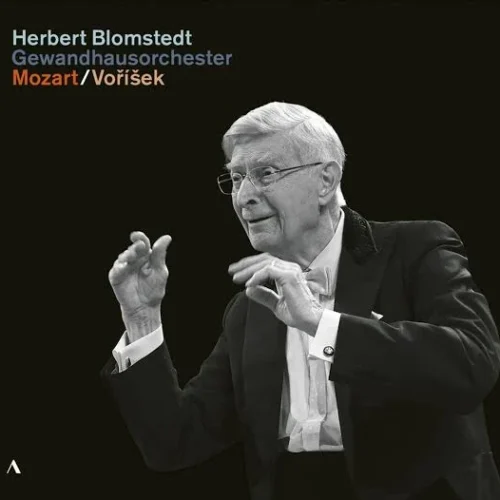
The Swedish conductor Herbert Blomstedt (1927–2026) passed away on 4 November 2026. In recent weeks, tributes have poured in from orchestras, soloists and fellow conductors around the world. His career spanned seven decades and several continents. He was in many ways a unique musician, whose faith and view of humanity guided his work as a conductor of many of the world’s greatest orchestras.
Blomstedt was loved by his orchestras for his humour and humanity. At the same time, he had a remarkable ability to make the music sound the way he wanted. But like one of his role models, Bruno Walter, he never used authoritarian methods to impose his ideas. Instead, he relied on his natural charm and knowledge to convince the musicians.
Blomstedt was born to Swedish parents in Springfield, USA. His father was a Seventh-day Adventist pastor, and Blomstedt followed the same faith throughout his long life. He never held rehearsals during the Sabbath, from Friday evening to Saturday evening. Concerts, however, were permitted, as Blomstedt did not regard performing as work.
After studying music in Sweden, and later at Tanglewood with Leonard Bernstein and in Salzburg with Igor Markevitch, Blomstedt began his conducting career with the Norrköping Symphony Orchestra (1954–62). He then moved on to the Oslo Philharmonic (1962–68) and the Danish Radio Symphony Orchestra (1967–77), establishing his successful international career.
This was followed by ten years with one of the world’s oldest and finest orchestras, the Staatskapelle Dresden (1975–85). In Paul Smaczny’s documentary about the conductor, Blomstedt reveals that he hesitated for a long time before accepting the position, as he felt a deep dislike of the communist regime at the time, which also persecuted many Christians. In the end, the opportunity to lead such a legendary orchestra outweighed his reservations, and he accepted the post. During this period, he also served as chief conductor of the Swedish Radio Symphony Orchestra in Stockholm (1977–82). Later came chief conductor positions with the San Francisco Symphony (1985–95), the NDR Symphony Orchestra (1996–98) and the Leipzig Gewandhaus Orchestra (1998–2005). During the final two decades of his life, Blomstedt returned as a guest conductor to his former orchestras and to many of the world’s other leading ensembles, including those in Berlin, Vienna, Amsterdam, London, Munich, Chicago, Cleveland and Boston.
Blomstedt’s music-making had several distinctive qualities. He combined an almost scientific approach to music with a genuine joy in making it. In Leipzig, for example, he encouraged the musicians to adopt a more historically informed style of playing in Bach and the Viennese Classical repertoire. His performances offered clarity and attention to detail, but also a consistently warm glow. It was as though Blomstedt wanted to bring his favourite composers down from their pedestals and back to earth, without losing any of the music’s spiritual dimensions.
One of his greatest strengths was his ability to bring out the long lines in a work’s musical structure. Blomstedt could sometimes be criticised for playing down the more dramatic and demonic elements in the music, focusing instead on logic and lyricism. At his best, however, he combined power and feeling to create performances of great musical impact.
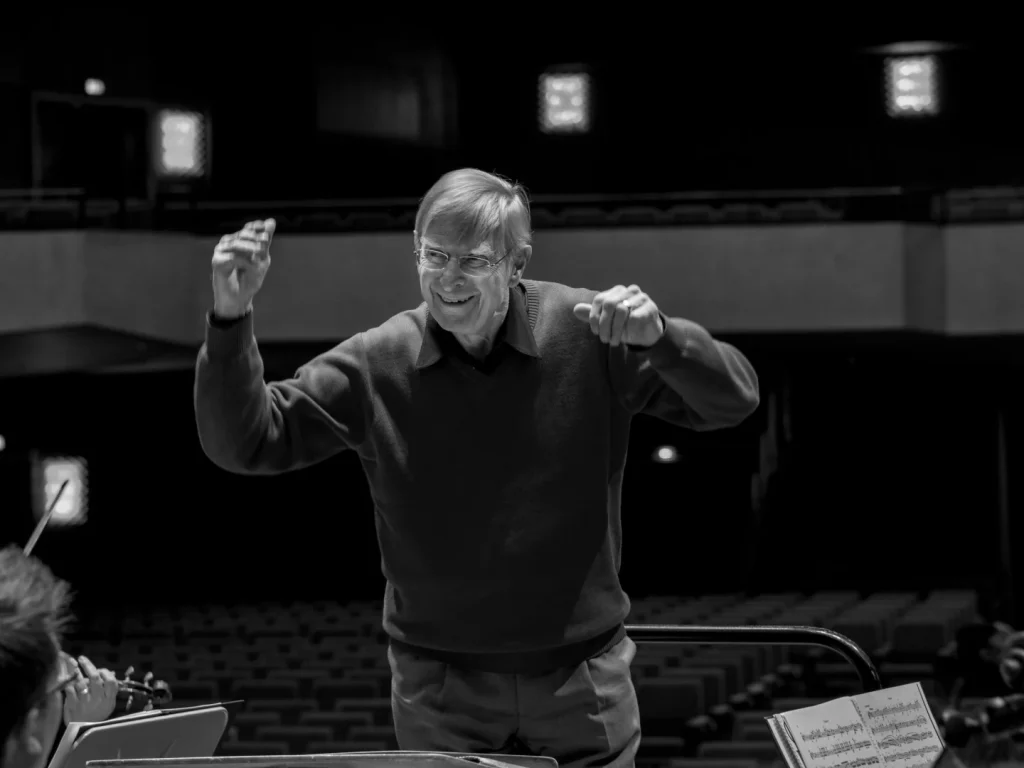
Having begun as a conductor who gave many world premieres of modern works, Blomstedt gradually narrowed his repertoire over the years, concentrating mainly on the German and Austrian classics. He was also an exceptionally active recording artist and left behind an extensive discography. During the 1960s and 1970s, he made numerous recordings of 20th-century Swedish music for Swedish record labels, featuring composers such as Stenhammar, Bäck, Rosenberg, Pettersson, Eliasson and Lidholm. His cycle of Carl Nielsen’s symphonies, concertos and other orchestral works, recorded with the Danish Radio Symphony Orchestra between 1973 and 1975 for EMI, was only the second complete cycle ever made. He also recorded Grieg and Weber for the same label.
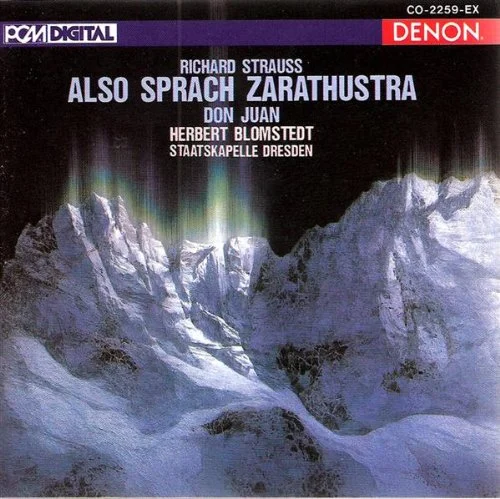
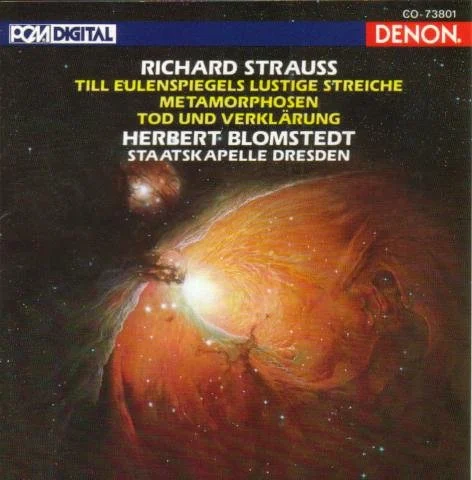
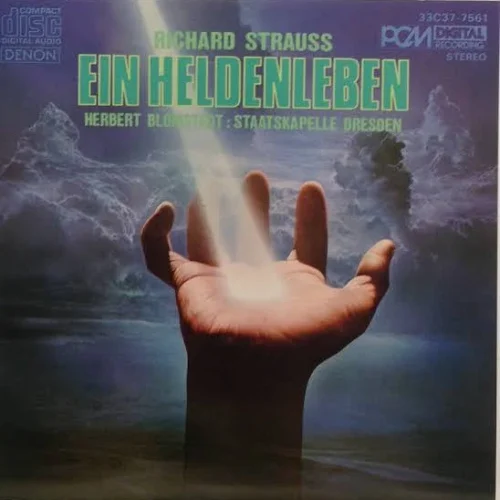
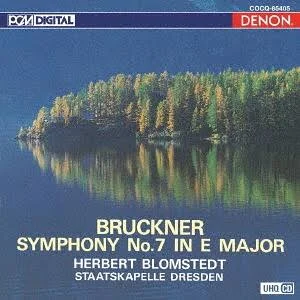
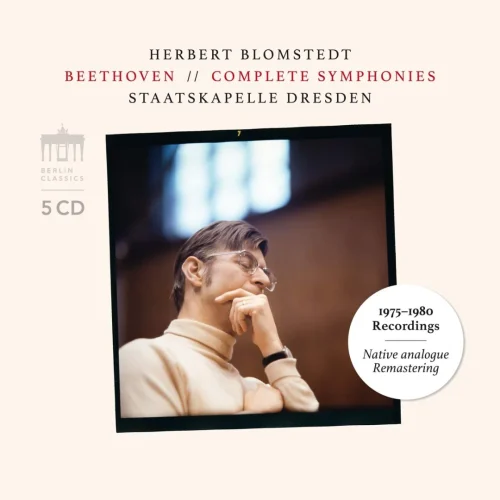
During his years in Dresden, he recorded complete cycles of Beethoven’s and Schubert’s symphonies, as well as Mozart’s late symphonies, Bruckner’s Fourth and Seventh Symphonies and Richard Strauss’s major symphonic poems. Blomstedt also conducted his only opera recording during this period, Beethoven’s Leonore (the original version of Fidelio). These recordings were made for the East German label VEB Deutsche Schallplatten (now issued by Berlin Classics) and the Japanese label Denon.
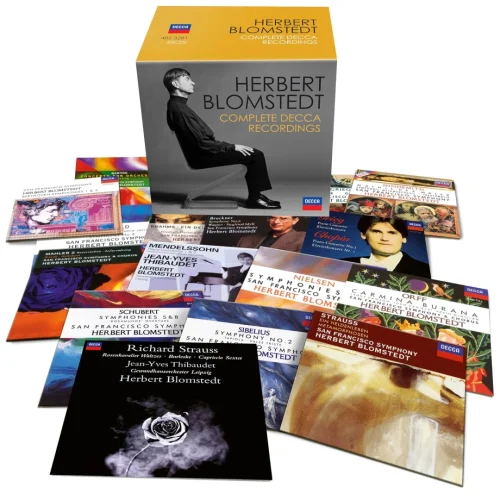
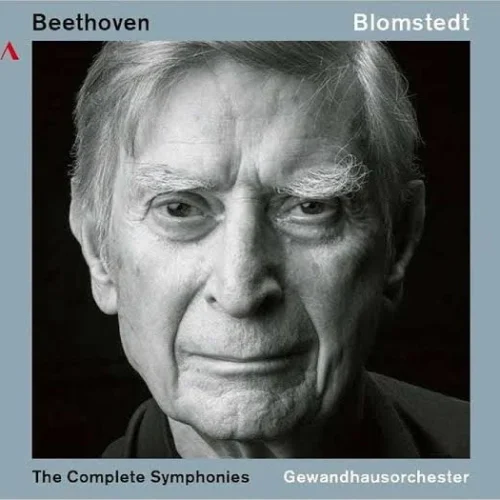
Many successful recordings followed on Decca with his San Francisco orchestra, including symphonies by Beethoven, Berwald, Schubert, Mendelssohn and Bruckner. He also recorded cycles of Brahms’s works for chorus and orchestra, orchestral music by Hindemith and Strauss, and the symphonies of Nielsen and Sibelius, among other works. In recent years, several labels have also released recordings of complete Beethoven, Brahms and Bruckner symphony cycles with the Gewandhaus Orchestra. The Swedish label BIS also released a Stenhammar recording featuring Blomstedt and the Gothenburg Symphony Orchestra in the Second Symphony and the Orchestral Serenade.
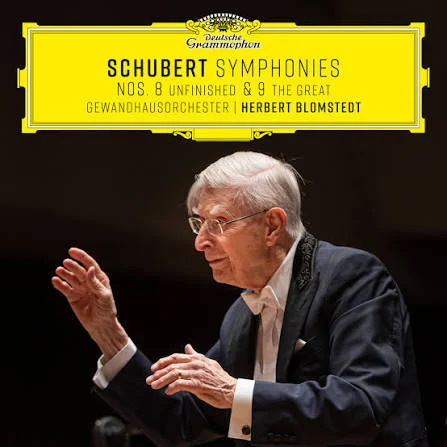
Which of these recordings are the finest is, of course, open to endless debate. His performances of Mozart’s late symphonies have clarity and elegance, but above all, particularly in his most recent interpretations from Munich and Bamberg, an inner light that captures the very essence of this music. Blomstedt’s two Beethoven cycles are noticeably different: the first, from Dresden, is dignified and traditionally German in style, while the later cycle from neighbouring Leipzig is more modern, fresher and more influenced by the historically informed performance movement. His Schubert has a lyrical sensitivity that reached its peak in the serene and majestic interpretations of the last two symphonies, recorded with the Gewandhaus Orchestra for Deutsche Grammophon towards the end of his life. In Brahms, the long musical lines take precedence over the music’s dramatic power, but the performances have a memorable warmth and genuine humanity.
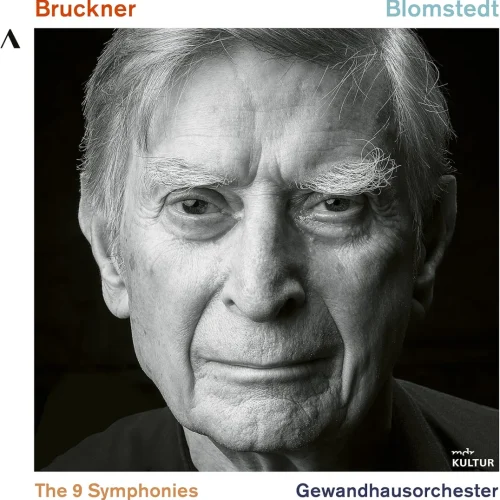
Bruckner’s music was in many ways one of Blomstedt’s greatest strengths. He felt an almost spiritual connection with the composer. Over the years, he made numerous recordings of individual symphonies, and his affinity for Bruckner eventually culminated in a complete cycle of Symphonies Nos. 1–9, recorded in Leipzig for Accentus. These interpretations give the music a sense of deep feeling and majestic architecture that few can match. Mahler’s music also became increasingly central to Blomstedt’s repertoire later in his career. In his recordings of Mahler’s Second Symphony (San Francisco Symphony/Decca) and Ninth Symphony (Accentus/Bamberg Symphony), the theatrical and neurotic elements are played down in favour of the music’s structure and lyrical qualities.
Hindemith and Strauss were two composers for whom Blomstedt had a natural affinity. His interpretations rank among the very best, not least his powerful performance of Hindemith’s Mathis der Maler Symphony (Decca) and his strongly structured interpretations of Also sprach Zarathustra, Ein Heldenleben and Eine Alpensinfonie (Decca, Denon).
Throughout his long career, Blomstedt was also a champion of Nordic composers. Among his recordings, his Nielsen cycle for Decca, the second he made, stands out as probably the finest on record, with a convincing sense of power and unity. His Sibelius recordings for the same label are also of a high standard, although they lack something in imagination and atmosphere. Blomstedt’s contribution to Swedish music must also be mentioned. With some of the world’s finest orchestras, he performed works by composers such as Berwald, Stenhammar and Lidholm, particularly towards the end of his long life.
In the United States, Japan, Germany and Austria, Herbert Blomstedt was a musical legend, having conducted these countries’ leading orchestras for more than half a century. His memory also lives on in many other orchestras around the world, and of course in his native Sweden, where he frequently appeared as a guest conductor with the orchestras in Gothenburg and Stockholm. Above all, he wanted to be remembered as a good colleague, a musician who always put the music before his own ego.