
Bayerische Staatsoper, Munich, 23 October 2026
Richard Strauss: Ariadne auf Naxos
Richard Strauss’ Ariadne auf Naxos, with a libretto by Hugo von Hofmannsthal, is one of the most fascinating works in the operatic repertoire, combining the tragic world of opera seria with the light-hearted comedy of the commedia dell’arte. Robert Carsen’s production at the Bavarian State Opera, which premiered at the Prinzregententheater in 2008, is a very thoughtful and interesting interpretation of the work. Carsen explores the psychological relationships between the characters with great care, making excellent use of the theatrical elements that are already present in Hofmannsthal’s libretto. The action takes place in a largely empty theatrical space, with dancers reflecting the movements and emotions of the principal characters. This approach creates an interesting connection between the different levels of the drama, without distracting from the music. Carsen manages to combine the comic and tragic elements of the opera in a very convincing way, while giving the singers considerable freedom to develop their characters. Overall, a very intelligent and dramatically convincing production that has lost little of its impact since its premiere.
Musically, the performance was also of a very high level, with excellent music theatre from the entire ensemble. Not least the experienced Kurt Rydl, who brought his enormous theatrical experience and excellent sense of timing to the spoken role of the Haushofmeister. Irene Roberts delivered a magnificent portrayal of the Composer, combining her powerful, where er interpretation was full of passion and despair, capturing the character’s struggle between artistic ideals and the compromises of theatrical reality. Sabine Devieilhe was a brilliant Zerbinetta, with her clear, ringing soprano and extraordinary coloratura technique. She mastered the enormous vocal challenges of the famous “Großmächtige Prinzessin” with remarkable ease, combining vocal precision with a charming and lively stage presence.
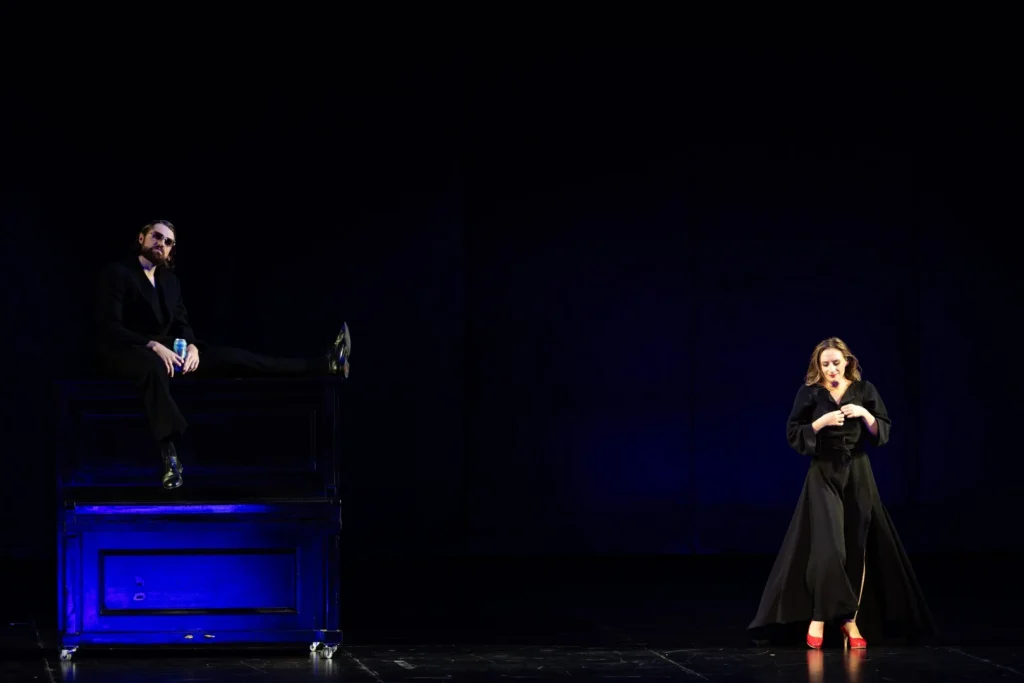
Anja Kampe gave a powerful and dramatic interpretation of the Primadonna/Ariadne, with her expansive soprano and considerable vocal intensity. However, her singing occasionally sounded a little too Wagnerian, with a rather heavy approach to some of Strauss’ more lyrical passages. Brian Jagde was equally impressive in the extremely demanding role of Bacchus, one of the most difficult tenor parts in the entire repertoire. His tenor had the necessary stamina and dramatic intensity, particularly in the brutally high passages, which he mastered with remarkable security.
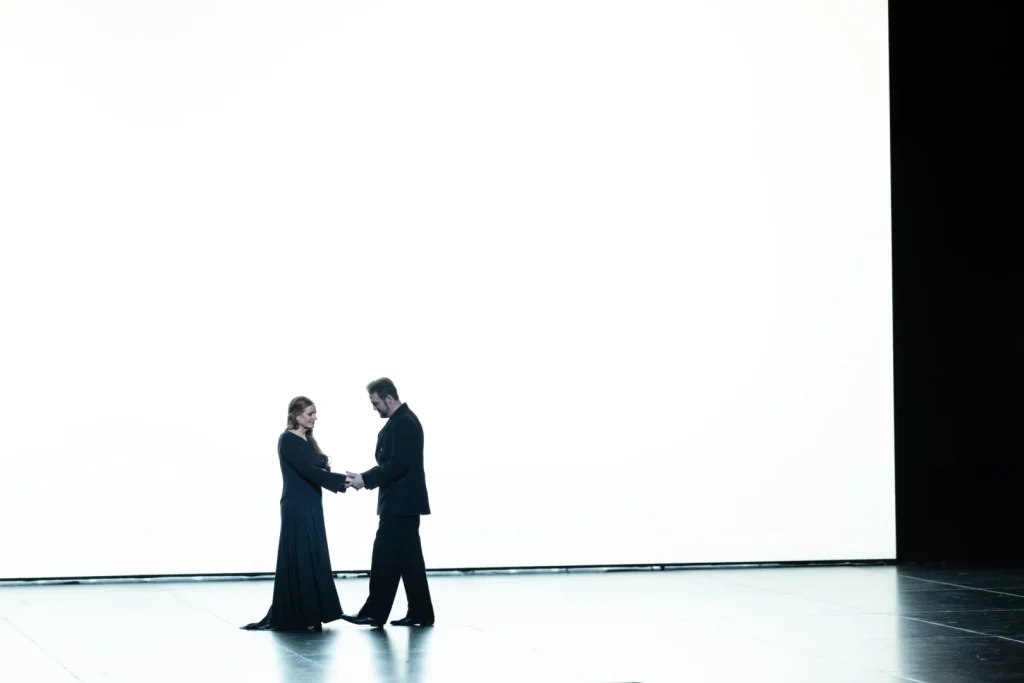
The Bayerisches Staatsorchester delivered a magnificent performance under Robin Ticciati, bringing shimmering beauty and a remarkable richness of colour to Strauss’ orchestral score. Ticciati conducted with great sensitivity and attention to detail, allowing the lyrical passages to unfold naturally. Occasionally, one could have wished for a little more dramatic edge, particularly in the more intense orchestral passages. However, he maintained an excellent balance between orchestra and singers, giving the voices enough space to soar above the orchestral sound without losing the richness of Strauss’ instrumentation.
All in all, an excellent evening of music theatre, with a thoughtful and convincing production, an outstanding ensemble and beautiful orchestral playing. A performance that demonstrated how effective Strauss’ Ariadne auf Naxos can be when the theatrical and musical elements come together so naturally.