
Umberto Giordano’s Andrea Chénier, premiered at La Scala in 1896, quickly became one of the central works of the verismo repertoire. Set during the French Revolution, the opera blends political drama with personal tragedy and gives singers rich opportunities to show both their vocal and interpretive abilities. From early historical documents to later studio productions and live performances, there are many recordings of the work that should not be missed. Without further ado, here are ten essential recordings of Andrea Chénier, in no particular order.
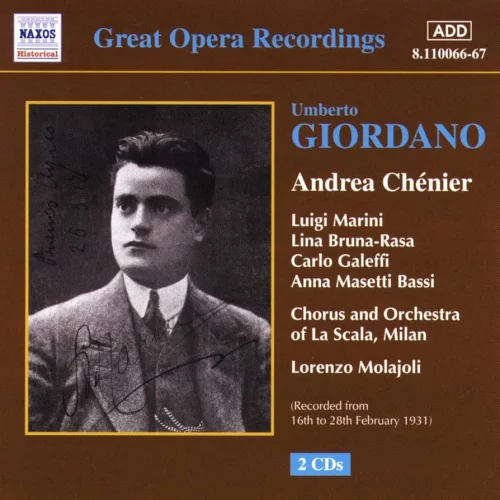
Lorenzo Molajoli / Orchestra del Teatro alla Scala (Naxos)
A recording from 1931 might seem like only a historical document to many listeners. However, Lorenzo Molajoli’s Andrea Chénier offers much more than that. Rooted in the pure Italian operatic tradition, it preserves a style of singing and performing that links directly back to the late nineteenth century, when the work was born. In fact, the audio quality surpasses many live recordings made decades later. Luigi Marini gives an old-school performance in the title role, more lyrical than in later interpretations, yet still with heroic force. Lina Bruna-Rasa’s Maddalena is vulnerable, sung with both beauty and passion. Carlo Galeffi’s Gérard is less dramatic than many others, but very well sung and convincing.
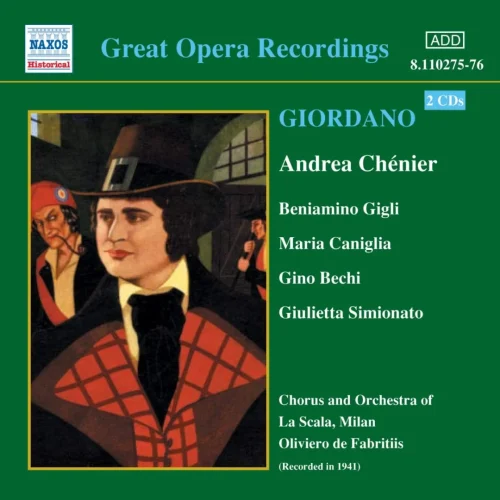
Oliviero de Fabritiis / Orchestra del Teatro alla Scala (Naxos)
Oliviero de Fabritiis’ wartime recording from 1941 captures major singers of the Italian stage in repertoire central to them, and offers a vivid example of Italian verismo style as practiced in the early twentieth century. Beniamino Gigli sings Chénier with unmistakable warmth and tenderness, approaching the poet as a lyrical figure rather than a purely heroic one. Maria Caniglia, also one of the key figures of the Italian operatic stage at the time, sings Maddalena with power and weight, leaning into the emotional high points with intensity. Gino Bechi brings firm authority to Gérard, singing with a solid core of tone. Despite the audio limitations of its time, this recording remains a cornerstone of the Italian opera discography.
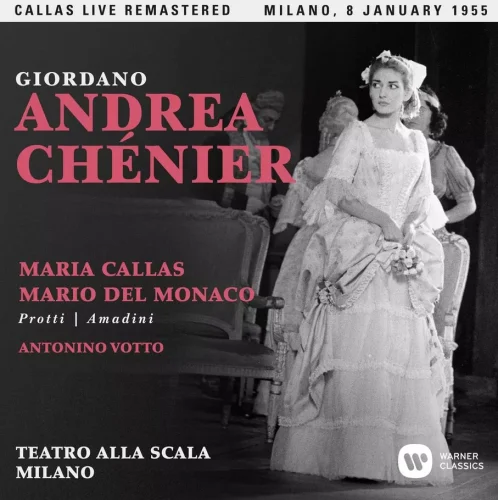
Antonino Votto / Orchestra del Teatro alla Scala (Warner)
Mario Del Monaco and Maria Callas appear together in some epic operatic encounters, such as Norma and Aida, and the 1955 recording of Andrea Chénier at La Scala, conducted by Antonino Votto, belongs on that list. Despite underwhelming sound quality, the theatrical intensity shines through every second of the performance. Callas shifts tone and color to reflect Maddalena’s development, building a clear dramatic line while preserving the character’s vulnerability. Her ‘La mamma morta’ later became known to a non-operatic audience through the 1993 film Philadelphia. Del Monaco sings the title role with his characteristic ringing edge, making the poet an iconic heroic figure. The tension between the two singers is, as usual, almost tangible. Protti adds firmness and theatrical clarity as Gérard, rounding out the cast with experienced stage presence.
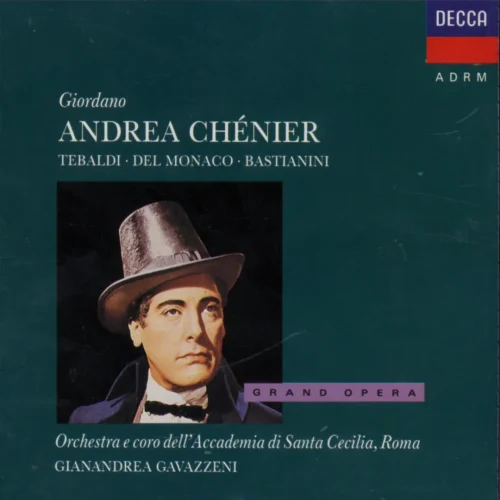
Gianandrea Gavazzeni / Orchestra dell’Accademia Nazionale di Santa Cecilia (Decca)
Decca’s 1956 studio recording under the baton of the great Italian conductor Gianandrea Gavazzeni may be, for many listeners, the reference recording, combining verismo passion, musical precision, and excellent sound quality. Mario Del Monaco’s Chénier again needs no introduction, combining power with vocal beauty and singing more disciplined here than in the La Scala live recording. Renata Tebaldi offers a noble Maddalena — very lyrical yet dramatic. The two made many great recordings together, but this Andrea Chénier is certainly among their finest. Ettore Bastianini rounds out the cast with a resonant, fiery Gérard. Gavazzeni conducts with a clear understanding of the score, balancing theatrical urgency with musical structure, all captured in Decca’s brilliant sound.
Fausto Cleva / Metropolitan Opera Orchestra (Myto)
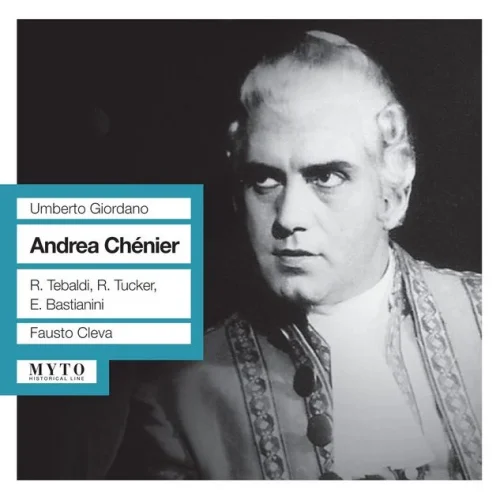
From a 1960 Metropolitan Opera live performance, mundanely conducted by Fausto Cleva, Richard Tucker, New York’s most celebrated tenor, delivers a thrilling Chénier: impassioned, heroic and alert to interpretative details that some of his contemporaries skate past. Maddalena is one of the roles that Renata Tebaldi not only dominated musically but also made fully her own dramatically. Her singing is outstandingly beautiful, yet she also finds the character’s emotional spine, shaping a dramatically complete Maddalena, helped in no small part by the electricity of a live recording. Ettore Bastianini, perhaps the ultimate Carlo Gérard, crowns an excellent cast, and like Tebaldi he sounds more intensely involved here than in the studio, responding to the heightened theatrical stakes of the performance.
Bruno Rigacci / Orchestra Del Teatro Comunale Di Firenze (Myto)
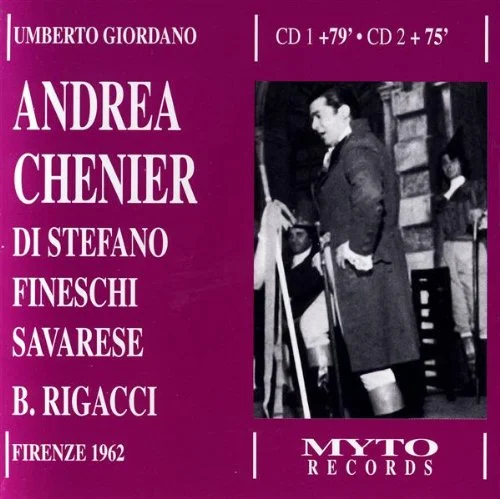
A live performance from Florence in 1962, conducted by Bruno Rigacci, may not be the most famous, but it is well worth discovering. One of the finest lirico-spinto tenors of his time, Giuseppe Di Stefano offers an elegant portrayal of the title role, marked by expressive phrasing and vivid word delivery, well suited to the passionate poet. Onelia Fineschi focuses on Maddalena’s emotional arc, singing with dramatic focus, while Ugo Savarese brings solidity and weight to Gérard. Though not technically perfect, this recording is a fine example of how Italian opera sounded in Italian theatres of the period.
Gabriele Santini / Orchestra del Teatro dell’Opera di Roma (Warner)
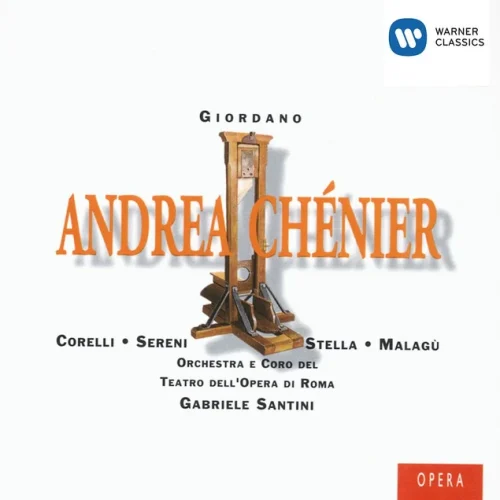
In this 1963 studio recording, conducted correctly, if a bit superficially by Gabriele Santini, the biggest appeal is Franco Corelli in the title role. The Ancona-born tenor, who alongside Mario Del Monaco dominated Chénier in the 1960s, brings an exciting, passionate and opulent sound to the part. Often accused of overdoing the role, especially on stage, Corelli is notably more restrained here, which makes this his most satisfying portrayal of the character. Antonietta Stella may not have the natural richness of tone of someone like Renata Tebaldi or the ability to inhabit a role as fully as Maria Callas, but her Maddalena lands somewhere in between, well sung and shaped with real nuance. Mario Sereni’s Gérard is elegant and properly voiced, but he lacks a bit of punch.
Anton Guadagno / Philharmonia Orchestra (Myto)
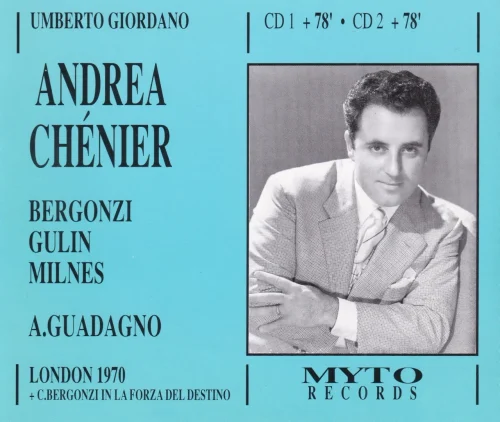
The main reason to own this 1970 live recording is Carlo Bergonzi’s portrayal of the title role. More lyrical than most celebrated Chéniers, he sings with elegance and musicality, crowned by the kind of immaculate phrasing that defined his entire career. Nuanced, aristocratic and insightful, his reading is a necessary reminder that Andrea Chénier is a poet, not a barbarian or a brute. Spanish soprano Ángeles Gulín is a superb, deeply underrated Maddalena, inexplicably neglected by record labels at the time. A young Sherrill Milnes makes a strong impression as Gérard, fiery and forceful, if occasionally a touch brash. Under Anton Guadagno’s baton, the cast delivers a committed, memorable performance overall.
James Levine / National Philharmonic Orchestra (RCA)
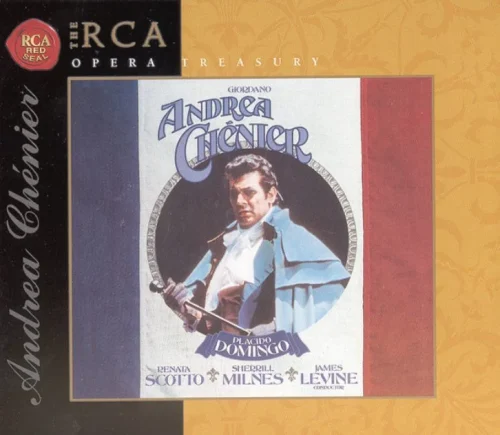
Even if the cast may be star-studded, the main attraction of this 1976 recording is James Levine’s conducting. Full of drama and passion, he is one of the few who truly brings this score to life, so often the victim of superficial, mediocre musical direction. Plácido Domingo offers a well-sung and well-characterised Chénier, even if the top register can feel a bit pushed. But as the intelligent singing actor he always was, his chief virtue here is avoiding the tasteless vocal exaggerations that so often tempt his colleagues. Renata Scotto, arguably the only soprano after Callas to inhabit Maddalena with such intensity, delivers every word with piercing intent, every phrase layered with nuance, to the point that you can forget this is a studio recording. It is a shame that the role sits at the very edge of her resources and that her voice was already beginning to fray at the time, yet her ‘La mamma morta’ remains among the most compelling on disc. Sherrill Milnes completes the principal cast in splendid form with a formidable Carlo Gérard.
Riccardo Chailly / National Philharmonic Orchestra (Decca)
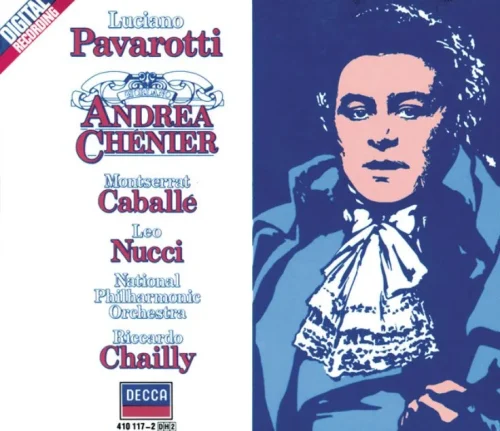
Like many of Chailly’s performances, this 1984 recording is conducted with plenty of energy but can feel somewhat shallow. Everything sounds gorgeous, the orchestral playing is polished and the instrumental colour is undeniably attractive, yet there is a lingering sense of missing substance and nuance. Luciano Pavarotti is not the most conventional Chénier, in that his singing is not as overtly heroic as one might expect, but the sheer beauty of his tone carries him through the role, with a few genuinely showstopping moments, even if the overall characterisation can come across as a bit bland. The most compelling element, though, is Montserrat Caballé’s Maddalena, outstanding both vocally and dramatically, and a touch lighter than usual for the part, which only sharpens the individuality of her reading. Leo Nucci’s Gérard is correctly sung and stylish, but ultimately a little short on depth. All in all, this is a recording to turn to when you want something undeniably pretty, rather than when you want to sink into the characters’ psychology.
Bonus
One of the finest sopranos of modern times, Anja Harteros made her Maddalena debut at the Bavarian State Opera in 2017, showing a compelling mix of unmistakable old-school passion, theatrical intensity, and modern technical brilliance. A video recording of the performance was released on the theatre’s own label, BSO Recordings, and — at least for Anja Harteros — it is definitely worth hearing.