Metropolitan Opera, New York, 18 October 2025
Vincenzo Bellini: La sonnambula
Even though Norma may be Vincenzo Bellini’s most famous opera, one could argue that the often underrated La sonnambula comes very close to being his true magnum opus. The consistency and balance throughout the whole score are almost miraculous; the arias for the three leads as well as the ensembles blend in a way that at times not even Norma or I puritani can match.
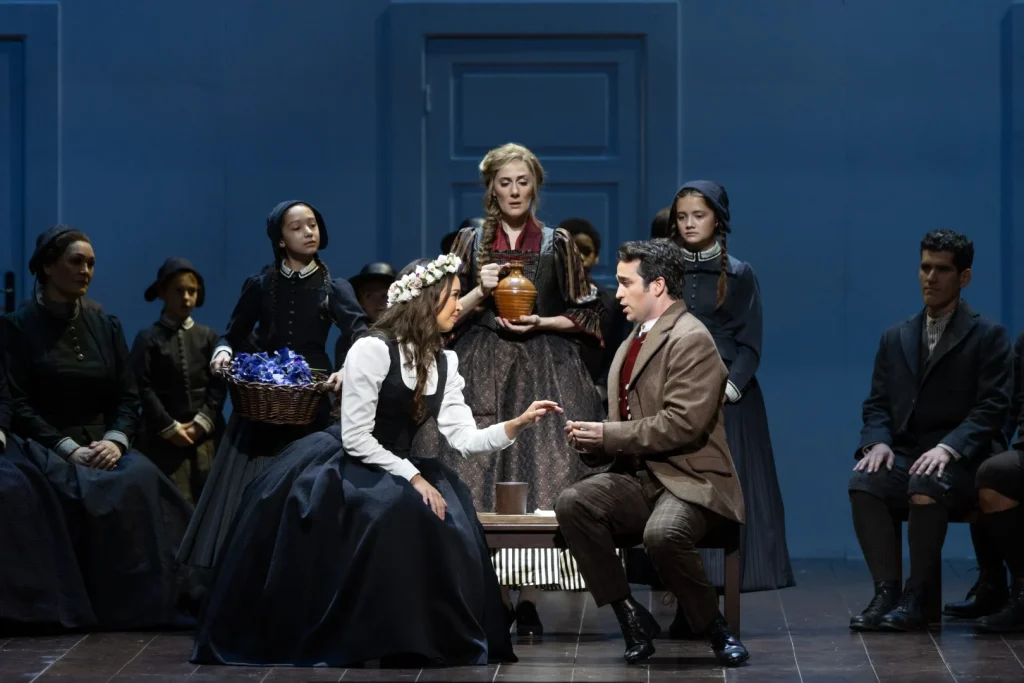
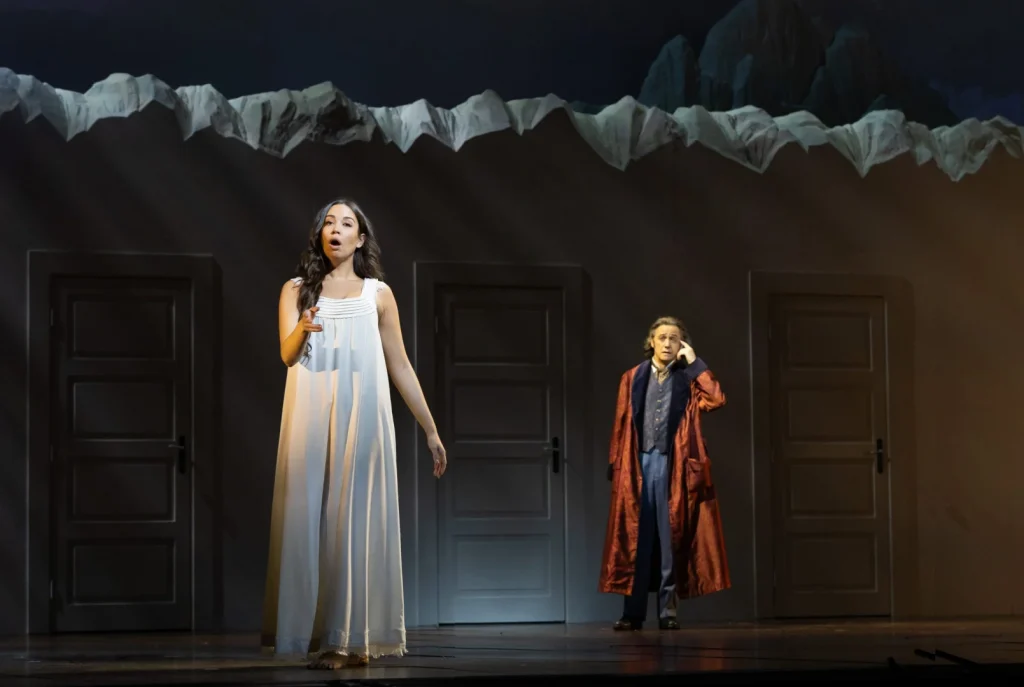
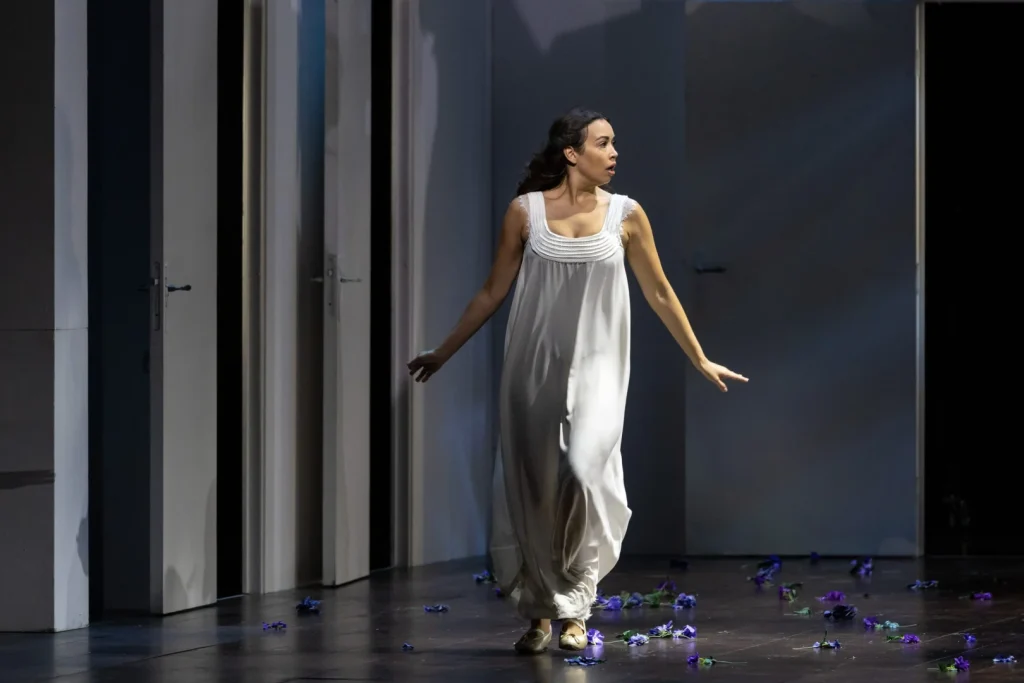
In this new production for the Metropolitan Opera, Mexican tenor and now stage director Rolando Villazón uniquely gave the Swiss village in which the action takes place an oppressive feel. The staging looked like a prison made of ice, isolated from the rest of the world, and the villagers seemed eternally stuck in their retrograde ways, forbidding even the smallest signs of human touch. Amina appears in this setting as someone evidently sick and tired of the village’s hidebound customs, whose only escape from those shackles comes when she goes to sleep and dreams of freedom, which gives rise to her somnambulism. Elvino and the rest of the villagers remain bound by tradition throughout the work, constantly correcting Amina whenever she dares to defy convention. Count Rodolfo’s arrival is not only that of a man returning to the land of his youth but also that of an enlightened figure bringing objects from the outside world, such as a globe or a camera, which fascinate Amina while disturbing the rest of the villagers.
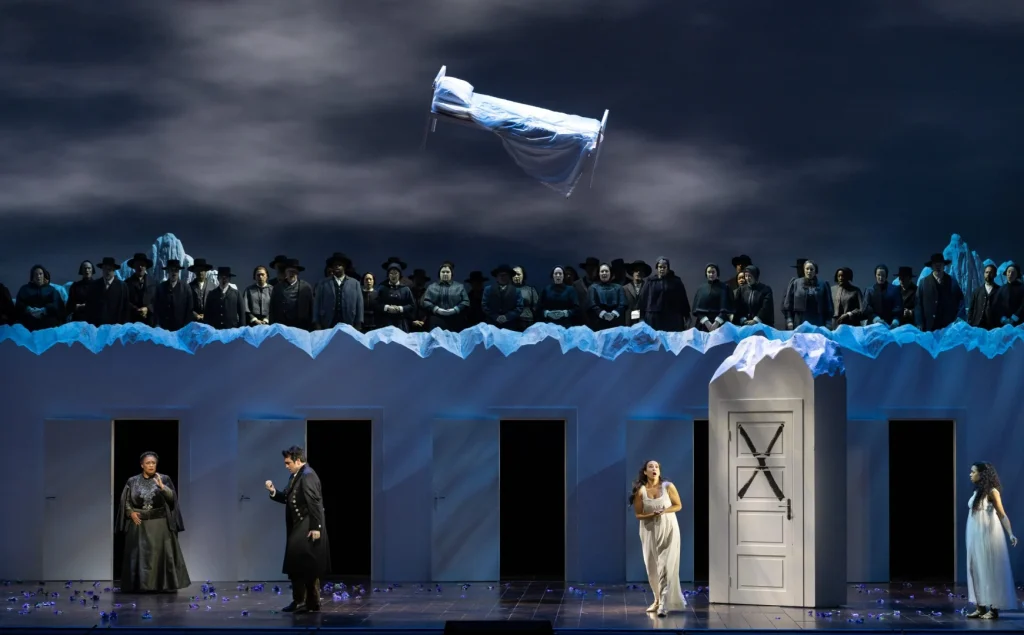
Villazón’s reading yields mixed results. While it makes the villagers more compelling and adds tension to the relationship between Amina and Elvino — for example, ‘Prendi, l’anel ti dono’ becomes almost disturbing rather than tender — it tries too hard to be something that the opera just isn’t. Although the message it seeks to convey — one of evolution, advancement and knowledge — may be powerful, the opera strays too far from its original form for this to work. At the end of the opera, for instance, Amina rejects Elvino instead of rejoicing at the resolution of the misunderstanding caused by her somnambulism. Instead, it seems that her joy stems from fleeing the village. While this may be an interesting idea in itself, it doesn’t quite make sense within the context of the opera.
Before the singers, the staging and everything else, an opera should have a solid musical foundation provided by the conductor to be performed correctly. In the pit, belcanto expert and artistic director of the Donizetti Opera Festival in Bergamo, Riccardo Frizza, brought the score to life outstandingly. Every detail and nuance within Bellini’s score felt studied and was given the importance it deserves, which is not always the case in other performances. The Met Orchestra, under his attentive direction, sounded magnificent and deeply responsive to the drama on stage.
Following her outstanding success at the Met in roles such as Gilda in Rigoletto, Violetta in La traviata and Juliette in Roméo et Juliette, American soprano Nadine Sierra gave a sensational performance as Amina. The first word that comes to mind when describing her performance is ‘effortless’. The hardest thing about singing is making something extremely difficult seem easy, and Ms. Sierra achieved exactly that. Her approach to every high note, every coloratura passage and each of Bellini’s notoriously long melodies was calm and assured, revealing a mastery of the belcanto style rarely heard today. Her compelling interpretation added layers of depth to Amina’s character as the evening progressed. It is also worth noting that Amina rarely leaves the stage during the opera’s two-hour-plus run, which makes Ms. Sierra’s performance all the more impressive. The high F at the end of ‘Ah, non giunge’ was the icing on the cake of one of the best performances I have ever seen at the Met.
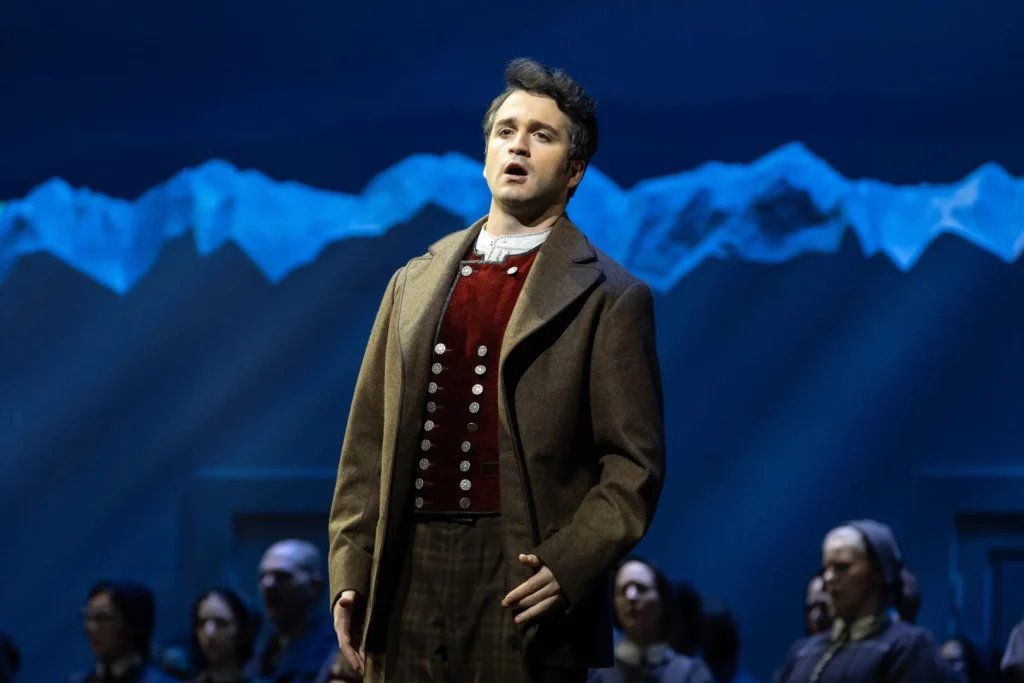
Opposite Nadine Sierra, Spanish tenor Xabier Anduaga delivered a tremendous Elvino. Often compared to Alfredo Kraus — perhaps because of the similar repertoire he shares with the great Canarian tenor — his vocal emission actually reminded me more of another Spanish legend, José Carreras. From the moment he stepped on stage and sang his first line, ‘Perdona, o mia diletta’, the entire auditorium was met with a torrent of sound that effortlessly filled the house whenever he sang. Such power, combined with crystal-clear tone, secure and radiant high notes, and the elegance and grace that Mr. Anduaga brought to his interpretation, made for a perfect pairing with Sierra’s Amina. His ‘Ah! perché non posso odiarti’ was an absolute showstopper that made the house erupt in applause.
As the dignified Count Rodolfo, Russian bass Alexander Vinogradov gave a superb performance. His warm and resonant bass voice complemented the two leads perfectly, while his comedic timing and expressions added an extra spark to the evening. ‘Vi ravviso’ was sung with a refinement that isn’t easily heard nowadays. The role of Lisa was performed remarkably by American soprano Sydney Mancasola, who earned a well-deserved round of enthusiastic applause from the audience for her Act II aria, ‘De’ lieti auguri’. Nicholas Newton as Alessio and Deborah Nansteel as Teresa rounded out the cast nicely.
All in all, even though I have some qualms with the production, the Metropolitan Opera’s new Sonnambula can be considered a resounding success, an evident reminder that great voices can still be found today and that belcanto, when sung this well, remains as captivating as ever.