Kungliga Operan, Stockholm, 4 October 2025
Antonín Dvořák: Rusalka
It seems the time has come for Antonín Dvořák’s 1901 fairy-tale opera Rusalka. The story is rooted in Czech folk tales but also has echoes of H.C. Andersen’s tale. The water nymph Rusalka’s dreams of love and of becoming her true self fit well with today’s obsession with beauty and the influence of social media on our lives. In recent years the opera has been staged more and more often around the world, and it has now finally reached the Royal Swedish Opera.
The most striking feature of the performance was the sound of the Royal Orchestra. In the past the ensemble sometimes struggled with intonation and ensemble playing, but under chief conductor Alan Gilbert it has undergone a remarkable transformation—from a fairly mediocre orchestra into a first-class opera ensemble. Orchestrally, the performance was a pleasure to listen to, with supple strings and dramatic brass attacks. Appointing Alan Gilbert as chief conductor stands out as one of the Opera’s most successful decisions in a long time.
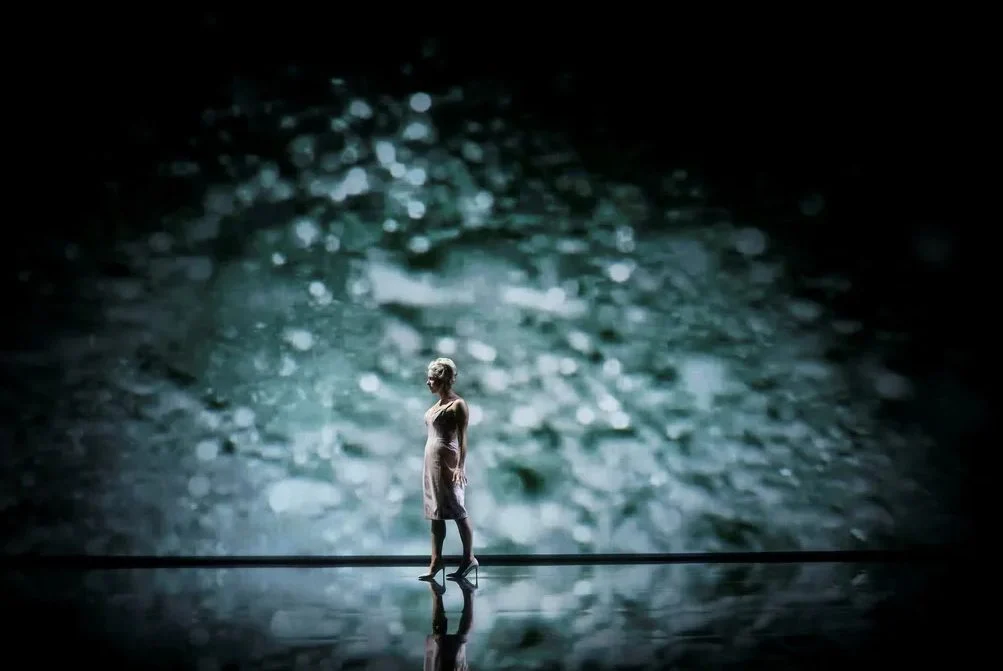
Director Netia Jones quite naturally highlights the work’s connections to the present day. The underwater setting has been removed; instead, Rusalka and her sisters swing around pipes in a kind of subterranean industrial landscape, where the water goblin, toolbox in hand, keeps the system under control. Later we meet the witch in her clinic, recast as a plastic surgeon who turns Rusalka into a stereotypical modern beauty with blond hair and a tight dress. Throughout, the staging is supplemented by digital elements.
The director’s ideas are not necessarily misguided—the problem is that the staging feels mechanical. There is little real life in the performance or in the acting of the singers. Dvořák’s radiant music, so finely orchestrated and full of passion and warmth, clashes strongly with this sterile production and its flickering digital effects.
Vocally, the production is of a high standard. Lauren Fagan as Rusalka is the standout, with a beautiful, warm tone and an easy reach into the upper register. Kristian Flor, as the water goblin, is also impressive, showing deep compassion for his daughter Rusalka’s fate and an instinctive feel for the Czech idiom with his dark bass-baritone voice. Julia Sporsén gives the foreign princess a commanding stage presence with vocal intensity. Tenor Brenden Gunnell was flown into Stockholm on Saturday morning to save the performance when the scheduled tenor fell ill. He sang the prince with security and credibility, though at times he struggled to project over the orchestra and his vibrato occasionally sounded a little tired.
In the end Rusalka bitterly learns what hasty decisions can lead to, and that one should not try to be someone one is not. As we in the audience stepped out of the opera house afterwards, we were met by a torrential downpour, and as one opera-goer said wryly: “The water goblin had the last word.”