On the evening of Monday, 12 September 1910, at the Musik-Festhalle in Munich, shortly before 7:45 PM, Mahler stepped onto the podium in front of the orchestra. It was finally time for the long-awaited premiere of his Eighth Symphony. The sight that met the eyes of over 3,000 spectators was overwhelming: more than 1,000 singers (adults and children), soloists, and musicians filled the stage. The premiere was one of the great cultural events before the First World War, and many leading musicians, writers, artists, architects, and directors were in attendance.
Mahler was a vacation composer; his work as conductor at the Vienna State Opera and with the Vienna Philharmonic left him no time to compose during the rest of the year. In the summer of 1906, as usual, he stayed with his family at their summer home in Maiernigg by Wörthersee. The work on the symphony progressed unusually fast, and almost as if in a trance, he completed the massive Eighth.
Once again, Mahler wrote a symphony with choirs and soloists, though it is quite different from his Second and Third Symphonies. It has two movements: the short first is based on the Latin Pentecost hymn “Veni, creator spiritus”, while the long second movement takes us to the final scene of Goethe’s Faust. In other words, the spiritual and the worldly stand side by side. Humanity’s search for redemption is at the center, and for Mahler, love was what could give life meaning and bring comfort in the face of death.
Mahler was well prepared. He had only three days of rehearsals himself, but throughout the year, choirs from Munich, Vienna, and Leipzig had been practicing, and his trusted colleague Bruno Walter had rehearsed the soloists extensively. Mahler kept adjusting the score until the last moment — to make the music clearer — while rehearsing the expanded Munich Konzertverein, known today as the Münchner Philharmoniker.
Mahler’s performance lasted about 85 minutes, with a short pause between the two parts. The Slovak writer and Mahler enthusiast Janko Cadra wrote in his diary the next day: “When last chords faded, the hall thundered, the children and singers waved with music papers… The applause took a quarter of an hour and Mahler had to appear to the audience 10 or 12 times.” This moment was probably Mahler’s greatest triumph as a composer. Yet, only eight months later, he passed away at the age of 50.
Mahler’s Eighth Symphony has always been controversial, with both devoted supporters and sharp critics. Conductors Leopold Stokowski and Willem Mengelberg, who were at the premiere, quickly made sure to perform the work with their orchestras in Philadelphia (1916) and Amsterdam (1912), respectively. By the outbreak of World War I, the Eighth had been performed about twenty times. After that, performances became rarer. The British premiere didn’t take place until 1930, when Sir Henry Wood conducted it with the BBC Symphony Orchestra. Several Mahler experts, including Theodor W. Adorno and Robert Simpson, have been critical of the symphony, believing that some of its music borders on the banal. Even Mahler’s assistants at the premiere, Bruno Walter and Otto Klemperer, later showed little interest in conducting the Eighth.
After the Mahler revival of the 1960s, the symphony began to return to concert halls, though it remains one of the less frequently performed. This is hardly surprising, given the vast number of musicians, soloists, and choristers it requires. The Eighth has often been performed at major anniversaries and commemorations, though it is rarely — if ever — performed with the gigantic forces Mahler had at his disposal in 1910.
Among the audience that evening were many of the era’s most famous figures. French politician Georges Clemenceau, who would later play a key role in World War I and the Treaty of Versailles, was there. So was architect Walter Gropius, who at the time was having an affair with Mahler’s wife, Alma. Writer Thomas Mann, who sent Mahler a letter of praise immediately after the concert, wrote: “the man who, as I believe, expresses the art of our time in its profoundest and most sacred form.” Mann’s young Jewish colleague, Stefan Zweig, also attended and considered the concert one of the great cultural experiences of his life.
Among fellow composers were the elderly Camille Saint-Saëns — who three years later witnessed Stravinsky’s notorious Rite of Spring premiere in Paris — as well as Richard Strauss, Max Reger, Erich Wolfgang Korngold, Alphons Diepenbrock, Max von Schillings, Alfredo Casella, and Alexander von Zemlinsky. They were all there.
Music critics from many countries had come to Munich. The Guardian’s correspondent noted: “Although seven other symphonies by Mahler have been heard before, none has made such a deep impression as this one. The choral parts are conspicuously predominant, and, the words being a sure guide, it is not difficult for the audience to follow the intentions of the composer. The emotional power of certain parts is of wonderful purity and uplifting strength”.
Besides Mahler’s own family, several leading figures from the world of opera and theater were present, such as set designer Alfred Roller and director Max Reinhardt. Also in the audience were well-known scientists, doctors, and — representing industry — none other than Henry Ford himself.
Today, only photographs, posters, letters, and reviews remain. The black-and-white pictures show Mahler rehearsing the enormous musical forces and reveal the vast crowd in a hall originally built for trade exhibitions in 1908. Those who were there are long gone. Two world wars have since devastated Europe, and in the aftermath of the second, the remnants of the bourgeois Jewish culture of Central Europe, to which Mahler belonged, were destroyed in the gas chambers. The belief in progress, and the faith in culture’s importance that was so alive in 1910, was buried just four years later when the madness of war began.
Mahler’s music is fundamentally pessimistic and full of doubt, which makes the Eighth an exception. It feels as though, in this work, Mahler is not only speaking for himself but also becoming the voice of his time. The performance of Mahler’s Eighth Symphony was not just a major event in itself — it also reflected the era’s progressive spirit and belief in human potential. Through art, people could become better, and society could move forward.
Yet, for Mahler himself, the message of love was probably the most important thing. Given the backdrop of his troubled marriage with Alma, this message radiates from this hypnotic, meditative, and grand symphony, which continues to be admired and criticized more than 100 years after its legendary premiere in Munich, where so many of the great figures of the time were present.
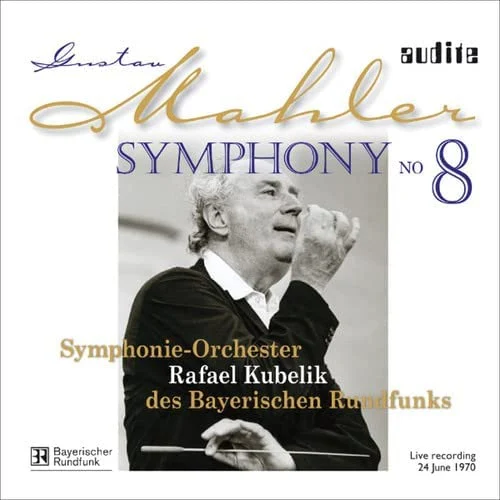
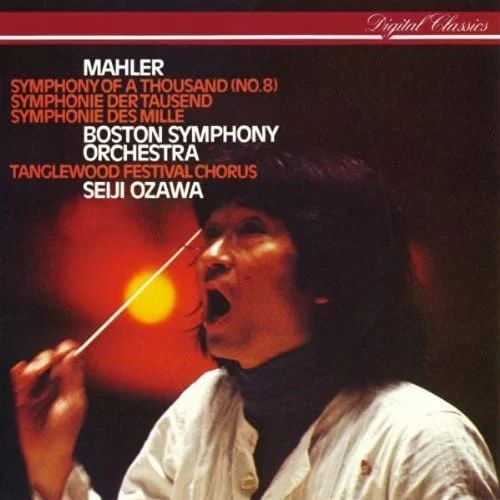
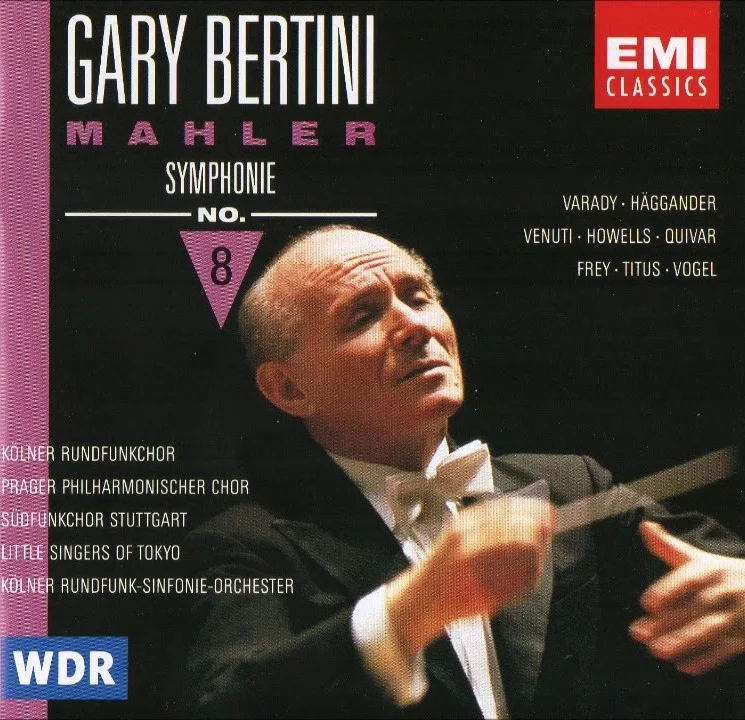
Recommended Recordings